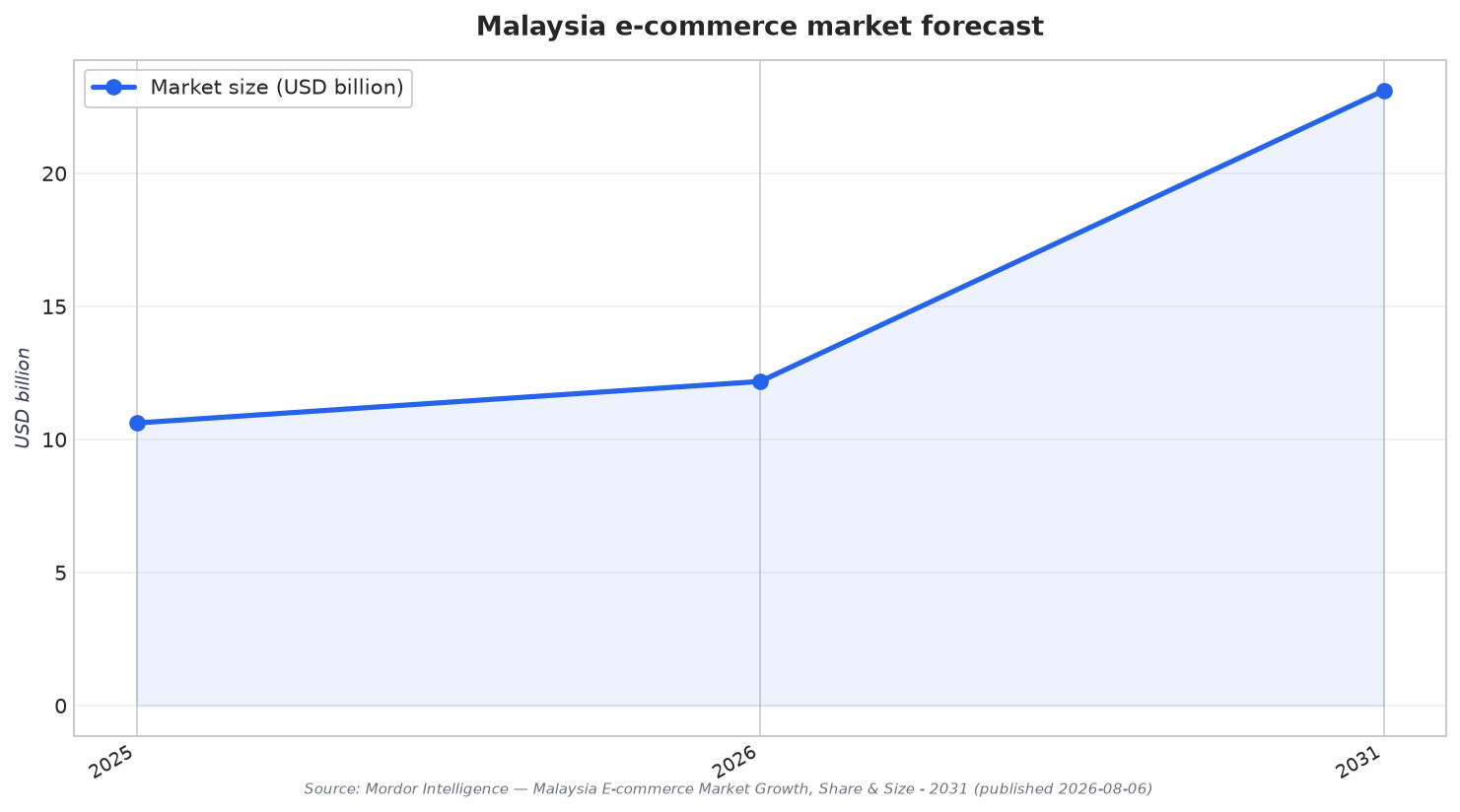
Malaysia’s e-commerce expansion is changing how brands think about returns. Mordor Intelligence expects the Malaysia e-commerce market to increase from USD 10.62 billion in 2025 to USD 12.18 billion in 2026, and to reach USD 23.11 billion by 2031, with a 13.67% CAGR over 2026–2031. As orders rise, returns become more visible to customers and more expensive to mishandle. A Malaysia reverse logistics strategy now sits close to customer trust because shoppers in Malaysia and beyond increasingly expect return options that feel frictionless and transparent, according to TNL HAI SHEN.
Several Malaysia-specific adoption signals point to why returns management is becoming central. Smartphones captured 72.67% of Malaysia e-commerce market size in 2025, and 5G covered 82.4% of populated areas by Q3 2025, according to Mordor Intelligence. Payments are also smoother at checkout and, by extension, more demanding at refund time. Digital wallets accounted for 34.92% of transaction value in 2025, and interoperable DuitNow QR has enabled payments at 2.6 million merchant points. Meanwhile, government agendas such as the National E-Commerce Strategic Roadmap 2.0 and MyDIGITAL are described as lowering entry barriers for 1.1 million small businesses, which increases competition and raises expectations for a clean, consistent return experience.
What High-Performing Returns Operations Look Like in Practice
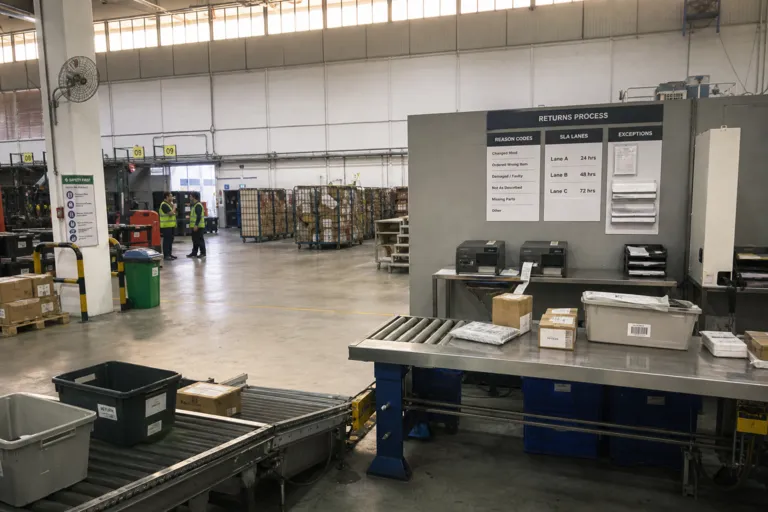
Reverse logistics covers the flow of goods from customer back to seller, distributor, or manufacturer, including returns, repairs, refurbishment, and recycling, as defined by TNL HAI SHEN. In Malaysia, the operational playbook starts with a clear returns policy, then moves through collection, inspection, sorting, and the decision tree for resale, repair, refurbishment, or disposal. TNL HAI SHEN links the urgency to demand growth, noting that Malaysian e-commerce transactions expanded by 30% in 2022 (cited to MIDA). The same source also describes a Shopee Malaysia example from 2022: after investing in reengineering its reverse logistics systems with automation and AI-driven sorting, return processing time was reduced by 35%, alongside improved return-related reviews and lower storage and administrative costs.
Global market context reinforces why technology-enabled returns are becoming standard, but Malaysia teams should treat these as comparison points rather than local measurements. Polaris Market Research estimates the global e-commerce logistics market at USD 500.76 billion in 2024, describing e-commerce logistics as including reverse logistics alongside warehousing, transportation, and last-mile delivery. Global Market Insights estimates the global reverse logistics market at USD 872.6 billion in 2025, forecasting growth at a 7.3% CAGR from 2026 to 2035, and notes defective returns held a 28% share in 2025. Fortune Business Insights emphasizes that seamless return processes are now a competitive differentiator, while Research Nester reports that in 2024, more than 25% of the world’s population shop online, which it links to rising return volumes.
For Malaysia operators, the best near-term gains often come from designing returns around how Malaysians shop and pay today. Mordor Intelligence notes urban penetration already exceeds 85% and highlights rising competitive intensity among TikTok Shop, Shopee, and Lazada, which can make returns quality a practical differentiator when acquisition costs climb. Build returns processes that match app-first behavior and digital wallet usage, and that can scale as the market grows toward 2031. Mordor Intelligence also points to “value-added reverse logistics” as an upside, especially to unlock demand from underserved consumers in East Malaysia. The takeaway is simple: treat returns management as a revenue-protecting system, not only a cost center, and make it measurable through cycle time, disposition outcomes, and customer feedback.
Why is reverse logistics becoming more important for Malaysia’s e-commerce businesses?
What does reverse logistics include in the Malaysian context?
What results did Shopee Malaysia report from upgrading its returns operation?
Which Malaysia trends are shaping returns and refunds expectations?
How should Malaysia reverse logistics be positioned against global market figures?