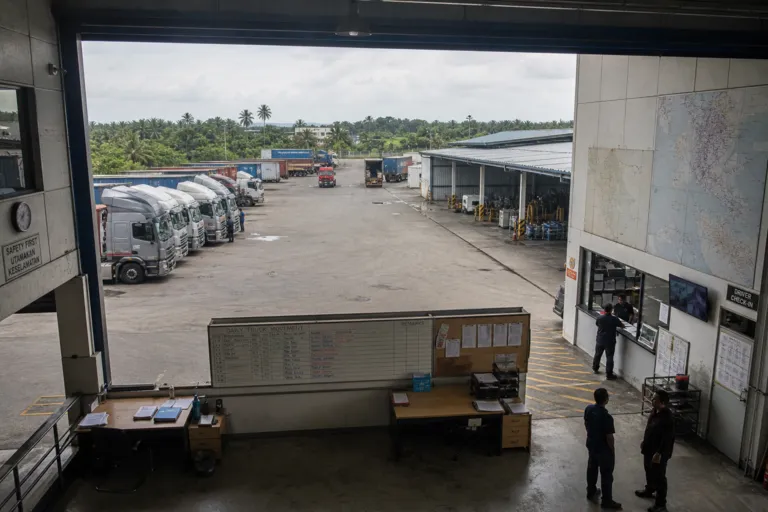
Malaysia’s road freight system is under pressure from a tightening labor pool. The Malaysian Logistics and Supply Chain Association projected a shortage of over 25,000 skilled heavy-vehicle drivers in the country’s trucking industry by 2024. In the Klang Valley–Johor corridor, spot-market haulage rates have increased by 12–15% annually, with sources linking the pressure to an aging workforce and younger workers drawn to gig-economy jobs. The knock-on effects show up in planning, too. Average transit times for container trucking between Port Klang and inland distribution facilities are still 20–30% longer due to peak-hour traffic on the North–South Expressway and Federal Route 2, despite MYR 7.5 billion in highway renovations under the 12th Malaysia Plan.
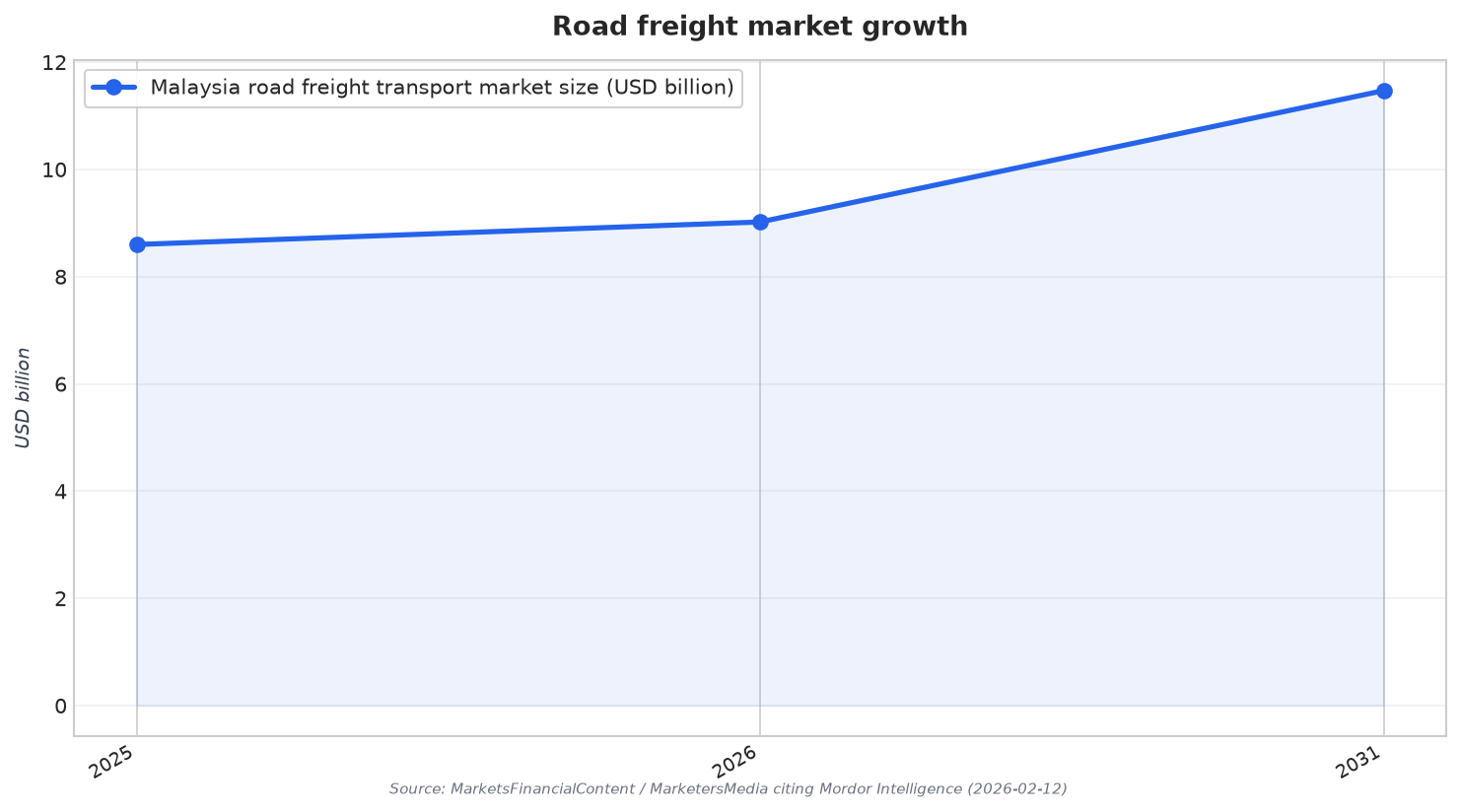
The squeeze lands in a market that still leans heavily on trucks. Malaysia’s expressway network includes over 2,400 kilometers of tolled highways, and the flexibility of truck-based delivery remains central for diverse cargo types. Demand signals are also pointing upward. One set of projections puts the Malaysia road freight transport market at USD 8.60 billion in 2025, rising to USD 9.02 billion in 2026 and reaching USD 11.47 billion by 2031, a CAGR of 4.93%. Broader logistics forecasts also show expansion, with the Malaysia freight and logistics market expected to grow from USD 29.70 billion in 2025 to USD 31.23 billion in 2026 and reaching USD 40.11 billion by 2031 at 5.14% CAGR.
Why Demand Keeps Rising Even as Driver Seats Stay Empty
Network complexity is increasing, and that makes driver availability more critical. E-commerce expectations are compressing delivery windows, with leading platforms shipping 95% of orders within 24 hours, while 64.8% of internet users prefer free delivery. Separately, secondary towns such as Ipoh, Melaka, and Kuantan are becoming more active fulfillment nodes. UPS and Ninja Van’s 5,500-location pick-up network blankets 90% of populated areas, which can lift density on spoke routes that feed regional mini-hubs. These shifts tend to raise shipment frequency and reduce average consignment weights, requiring more dispatch decisions and tighter scheduling on road freight lanes that already face congestion and labor constraints.
Industrial and cross-border growth adds more load to the same pool of drivers. Malaysia recorded MYR 378.5 billion (USD 82.3 billion) in investment approvals in 2024, supporting manufacturing output that needs predictable inbound and outbound trucking. On the Johor–Singapore lane, a single transshipment permit implemented in January 2025 removed duplicate customs filings and cut cross-border clearance times by roughly two hours per trip. The same analysis links the corridor’s modernization to potential bilateral truck-move growth of a compounded 6–7% annually, with quicker turns supporting the idea of one extra round-trip a day on the Johor Bahru–Tuas stretch. Meanwhile, policy and compliance changes are also reshaping fleets, from subsidized diesel at MYR 2.15 (USD 0.47) per liter to import duty rebates on battery-electric light and medium trucks until December 2025.
To cope, operators are leaning on technology and process changes, while the region experiments with longer-term options. In Malaysia, autonomous trucking trials on the North–South Expressway led by Plus Xpress and Sensible 4 are expected to move beyond sandbox testing by 2028. Fleet technology is also positioned as a near-term lever: AI-powered fleet management systems that optimize load sequencing, predictive maintenance, and driver dispatch are estimated to reduce operating costs by 12–18% for early adopters. Regionally, ASEAN road freight research notes persistent driver shortages as a common pressure, alongside demand spikes that push up spot rates during periods when trucks stand idle for lack of drivers. In Malaysia, the underlying issue remains clear: without enough qualified heavy-vehicle drivers, service promises get harder to keep just as shippers demand faster and more time-definite delivery.
What is the projected scale of Malaysia’s heavy-vehicle driver gap?
How are prices reacting to the driver and capacity squeeze in key corridors?
How does the Malaysia road freight driver shortage connect to congestion and transit time reliability?
What trade or border changes could increase trucking activity on Malaysia’s main cross-border lane?
What technologies are positioned to help fleets cope with fewer drivers?