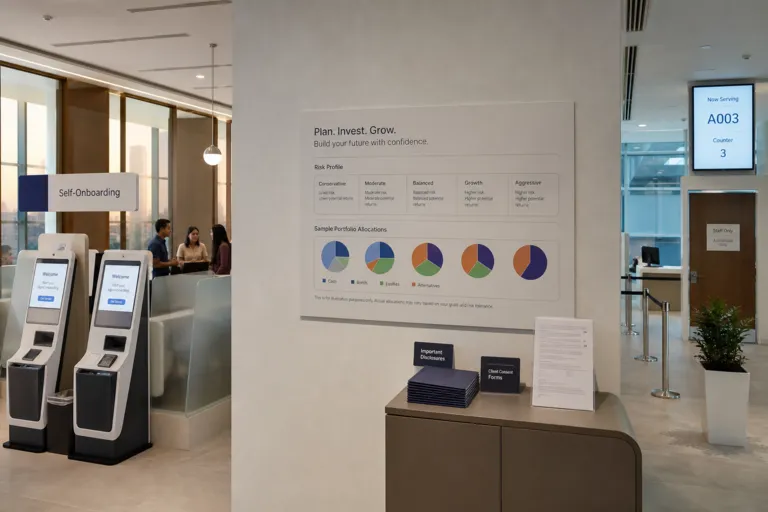
Digital wealth platforms in Malaysia are reshaping how people start and manage investing in 2026. The shift is linked to faster onboarding, lower barriers, and steady demand for clear, data-driven guidance. These platforms create a direct link between investors and investment products through mobile apps or online portals. Investors can monitor performance, adjust portfolios, and manage risks without waiting for appointments or paper statements. Many platforms use automated allocation to support disciplined investing, with decisions following a consistent process that encourages better habits and steadier contributions.
Digital wealth management in Malaysia also reflects how account setup and funding have become more integrated with daily payments. Investors can open accounts online, fund them through DuitNow, and access portfolios shaped by algorithm-based robo-advisory tools. In-app dashboards help users track portfolios, monitor contributions, and check performance regularly. Robo-advisory plays a key role by mapping an investor’s risk strength to a portfolio and balancing it automatically over time. Licensed platforms under the Securities Commission Malaysia (SC) framework disclose fees and portfolio behaviour within the app for clearer understanding.
What’s Driving Trust and Choice in Malaysia’s Digital Investing
Regulation has become a practical starting point for trust and comparison in Malaysia. Investors gain confidence when they see platforms listed under the Securities Commission Malaysia as Digital Investment Managers. As of July 2026, the SC lists 12 licensed Digital Investment Managers. That number alone does not describe every service style, because some DIMs serve retail investors while others focus on businesses, corporations, or specialist mandates. Still, it helps investors validate legitimacy before comparing features such as cash management products, money market portfolios, individual ETFs, income portfolios, and alternatives offered within the same app or group.
For many Malaysians, cost and structure are central reasons to use robo-advisors for managed portfolios. In Malaysia, managed portfolios can include automatic rebalancing, with management fees ranging from 0.2% to 0.8% per year. Minimum entry levels also vary by provider, with some retail-focused platforms starting from RM10 to RM250. Providers may offer more than conventional portfolios, including Shariah portfolios, thematic investments, money market products, individual ETFs, unit trusts, property investments, and digital-asset funds. These options broaden choice, but also make it important to read disclosures and understand what each product is and is not.
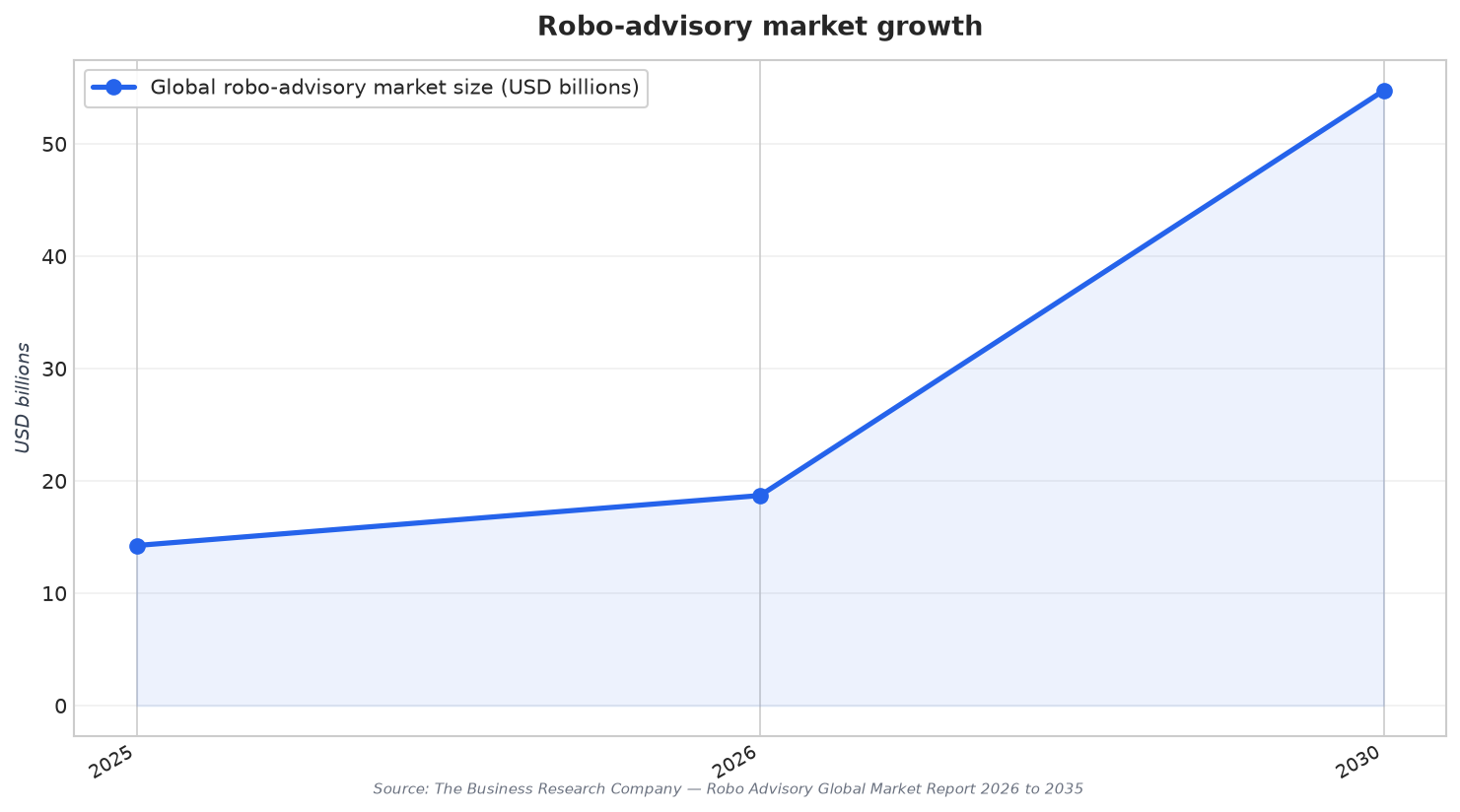
Global context shows why interest in automation and app-based investing keeps rising, even as local decisions should stay grounded in Malaysian rules and product details. A global robo-advisory market report cited a market size of $14.25 billion in 2025, with growth to $18.7 billion in 2026 at a 31.3% CAGR, and an expectation of $54.74 billion in 2030 at a 30.8% CAGR. Another report projected $42.16 billion in 2026 and a 2034 outlook of USD 1,348 billion, with a CAGR of 54.2% from 2026 to 2034. Against that backdrop, the Malaysia robo-advisor market discussion in 2026 is less about hype and more about how licensed DIMs combine onboarding, DuitNow funding, transparent fees, and automated rebalancing into one routine investing experience.
How many licensed Digital Investment Managers are listed in Malaysia in 2026?
What management fees do Malaysian robo-advisor managed portfolios charge in 2026?
How do Malaysians fund digital wealth accounts on these platforms?
What does the Malaysia robo-advisor market look like in terms of entry requirements?
Which global figures are often cited for robo-advisory growth (and why should Malaysians treat them as context)?