Supply chain finance is a set of financing processes designed to reduce costs and increase efficiency for parties in a transaction. It provides buyers and sellers with a short-term loan that aims to optimize working capital. In practice, it can sit alongside common trade documents and tools, including export and import bills, letters of credit, performance bonds, and shipping guarantees. For SME suppliers, the problem is familiar: you deliver goods or services, issue an invoice, and then wait. Many businesses operate on payment terms that can stretch from 30 to 60 to even 90 days, creating a gap between revenue on paper and cash in the bank.
In Malaysia, this is why invoice-based products and buyer-supported programs get attention. One local description of supply chain financing frames it as a buyer assisting a supplier, contractor, or service provider in obtaining financing. The same explanation positions it as a way to unlock working capital stuck in international supply chains, with a shared benefit: buyers can extend payment periods, while sellers get paid earlier. That structure matters for SMEs because working capital management is tightly linked to resilience and profitability. Research discussed in an SME working capital management review cites a study conducted in Malaysia (Gorondutse et al., 2017) supporting that good working capital management practices are directly associated with SME resilience and profitability.
Why Demand Is Rising and What the Numbers Say Globally
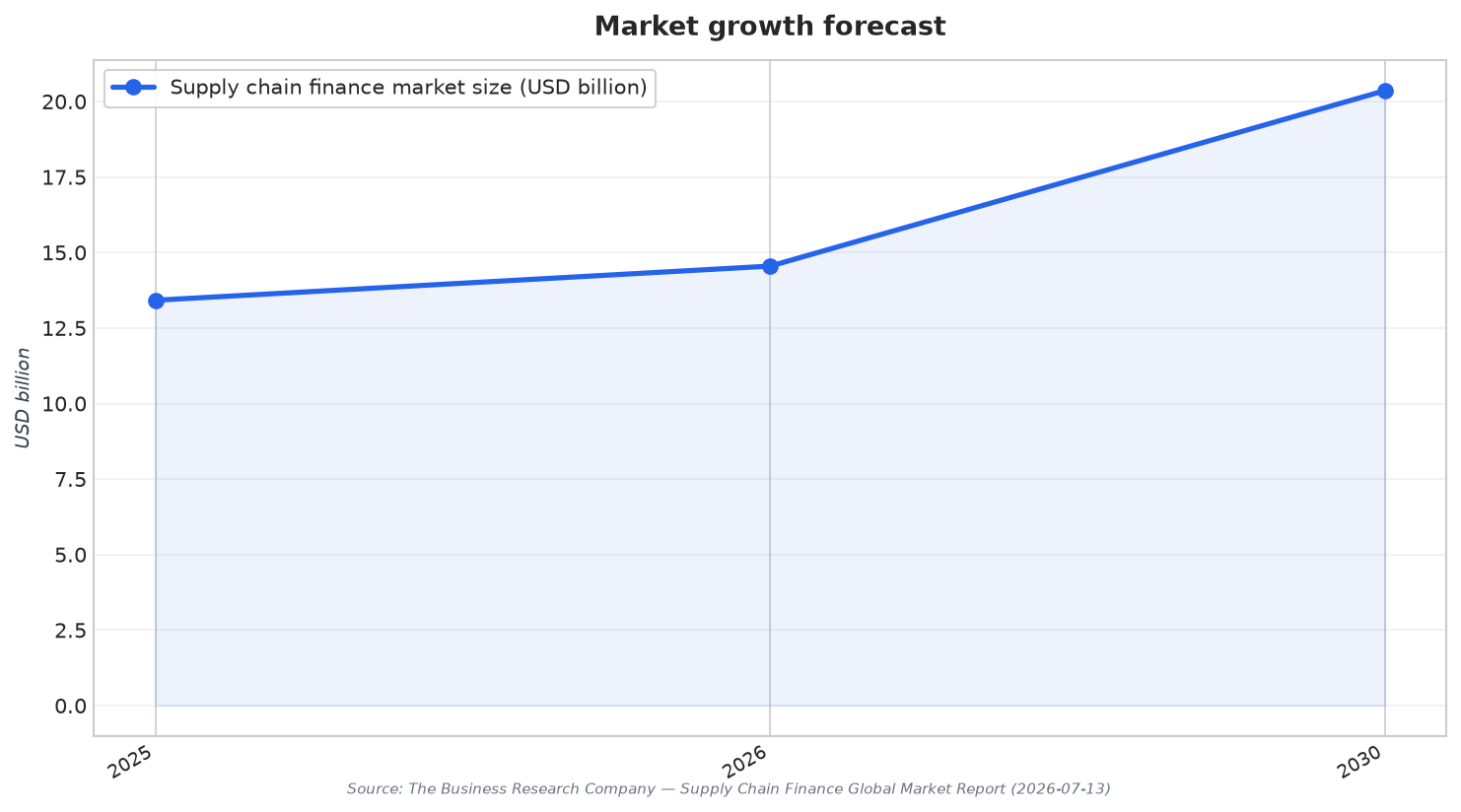
Global context helps explain why Malaysia supply chain finance is part of a wider shift, even when local outcomes depend on local adoption. The global trade finance gap is estimated to have doubled between 2017 and 2025 to $2.5 trillion, with emerging market economies described as the most affected. IFC also highlights that supply chain finance is growing because of unmet demand, and notes that about half of global trade is supply chain trade. Separately, a global market report estimates the supply chain finance market reached $13.42 billion in 2025 and is expected to grow to $14.55 billion in 2026, then to $20.36 billion by 2030, implying CAGR figures of 8.4% (2025–2026) and 8.8% (to 2030). The same report states Asia-Pacific was the largest region in 2025, while North America was the fastest-growing region.
For Malaysian SME suppliers, the practical lever is speed and fit-to-data. A Malaysia-focused invoice financing explainer argues that businesses can lose momentum while waiting on slow bank approvals, and positions invoice financing as a faster path to working capital. It also explains how platforms can assess creditworthiness using transaction data, invoice histories, payment behavior, and supply chain relationships, creating a different risk profile than a sparse credit file suggests. It adds that open finance frameworks Malaysia is developing under Bank Negara’s regulatory sandbox initiatives could accelerate data sharing with consent, reducing information asymmetry that has historically excluded SMEs from credit markets. In parallel, Malaysian case-focused academic work describes how companies across sectors used supply chain finance strategies—through collaboration, financial integration, and strategic initiatives—to improve financial performance, operational efficiency, and competitiveness in local and global markets.
The takeaway for SME suppliers is to treat supply chain finance as part of working capital discipline, not a one-off funding fix. Start by mapping where cash is tied up, then align financing to real transaction flows—purchase orders, shipping documentation, and invoices—so funding mirrors the supply chain. Where a buyer is willing to participate, a buyer-led program can support earlier supplier payment while preserving the buyer’s cash planning through extended payment periods. Where the need is urgent, invoice financing can convert approved receivables into liquidity faster, especially when lenders can use operational data to assess risk. Done well, these tools reinforce the core aim of working capital management: keeping the business stable while it grows.
What is supply chain finance, in simple terms?
How can supply chain finance help SME suppliers in Malaysia get paid earlier?
What global numbers show rising demand for supply chain finance?
How might data and open finance affect Malaysia’s supply chain finance options?