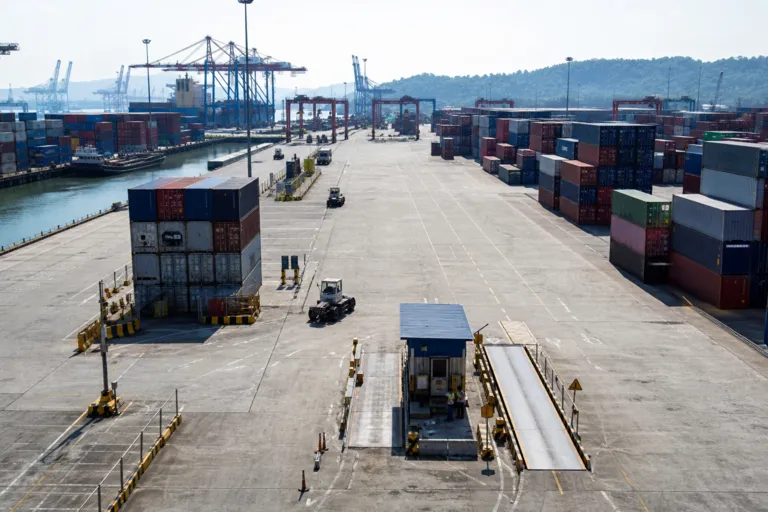
Geopolitical conflicts are increasingly influencing global economic stability and international business environments, and SMEs in emerging economies such as Malaysia are highly vulnerable because they depend on global supply chains and have limited financial capacity to absorb disruptions. Wars, trade disputes, and political tensions can disrupt international trade flows, increase commodity prices, and destabilize supply chains, which can quickly spill into freight planning and landed-cost decisions. Global indicators show how common delays have become: in 2023, 75% of companies reported supply chain delays due to geopolitical tensions. For Malaysia in 2026, this raises the priority of operational continuity planning, not only sourcing costs.
Freight costs can amplify these shocks fast. A 2026 analysis of global supply chain volatility describes ocean freight rates up by around 150% and air cargo costs higher by roughly 40%, a swing that can materially change offshore sourcing economics. The same period has seen route and chokepoint risks. In early 2024, Red Sea attacks delayed 12% of global container shipping, and earlier chokepoint events showed the scale of exposure, with the Suez Canal blockage in 2021 causing $9.6 billion per day in global trade losses. These are global figures, but they matter for Malaysian importers and exporters that rely on predictable sailing times and stable rate structures.
What Makes 2026 Different: Trade Friction, Volatility, and Investment Pullback
Several 2026 pressures overlap. WTO’s March 2026 outlook put baseline world merchandise trade volume growth at 1.9% in 2026, down from 4.6% in 2025; under a higher-energy-price scenario, trade growth would slow further to 1.4%. At the same time, OECD notes global value chains still account for roughly 70% of international trade, so cross-border dependencies remain structurally important. UNCTAD says tariffs rose in 2025 and highlights around 18,000 new discriminatory trade measures introduced since 2020, while technical regulations now affect roughly two thirds of global trade. For Malaysia, that combination means more documentation work, more landed-cost uncertainty, and more frequent replanning when rules shift by lane or product.
Malaysia’s SME challenge is not only external; it is also about response capacity. Research focused on SMEs in Malaysia points to practical resilience choices when international trade routes are disrupted: alternative shipping routes, regional distribution hubs, and local sourcing strategies to maintain operational continuity. It also emphasizes building stronger relationships with suppliers and logistics partners to improve coordination and information sharing across supply chains. Risk governance is shifting globally toward playbooks and contract structures. One 2026 risk-management view argues boards must fund dual routings, index-linked contracts, and tariff engineering, because canal chokepoints, Red Sea insecurity, and tariff shocks can extend routes and inflate costs.
For Malaysia supply chain risk 2026 planning, the actionable theme is to design for volatility rather than bet on a single “normal” rate or route. Diversifying supply lanes can cushion inflation spikes, geopolitical shocks, and port closures, but it increases coordination complexity and pushes companies to upgrade supplier visibility and risk-management tools. Capacity shifts can also change the pricing picture quickly: a May 2025 report cited the global container fleet expanding by approximately 9% in the past year, with 2.62 million TEU of new capacity added, even as detours and canal bottlenecks can absorb ships and sailing days and erode usable capacity. For Malaysian firms, especially SMEs, resilience in 2026 is a set of funded options: alternate lanes, clearer supplier communications, and contracts that acknowledge rate whiplash.
Why are Malaysian SMEs more exposed to geopolitical supply chain shocks?
What do 2026 sources say about freight cost swings?
What global trade and policy signals shape Malaysia’s 2026 risk outlook?
What practical steps help manage Malaysia’s supply chain risk in 2026?
How should companies approach “Malaysia supply chain risk 2026” without overreacting?