MediAsas is a new, voluntary medical insurance and takaful plan scheduled for nationwide launch in January 2027, after a 2026 pilot phase for final testing and refinement. It was previously known as the Base MHIT Plan and is being developed under the government’s RESET strategy, introduced in March 2025 by the Finance Ministry, Health Ministry and Bank Negara Malaysia. The plan is aimed at middle-income Malaysians who have been priced out of conventional medical insurance or who want a more affordable, streamlined alternative. Although it is supported by the government, it is not a social insurance programme, and it is sold by participating insurers and takaful operators under a common framework.
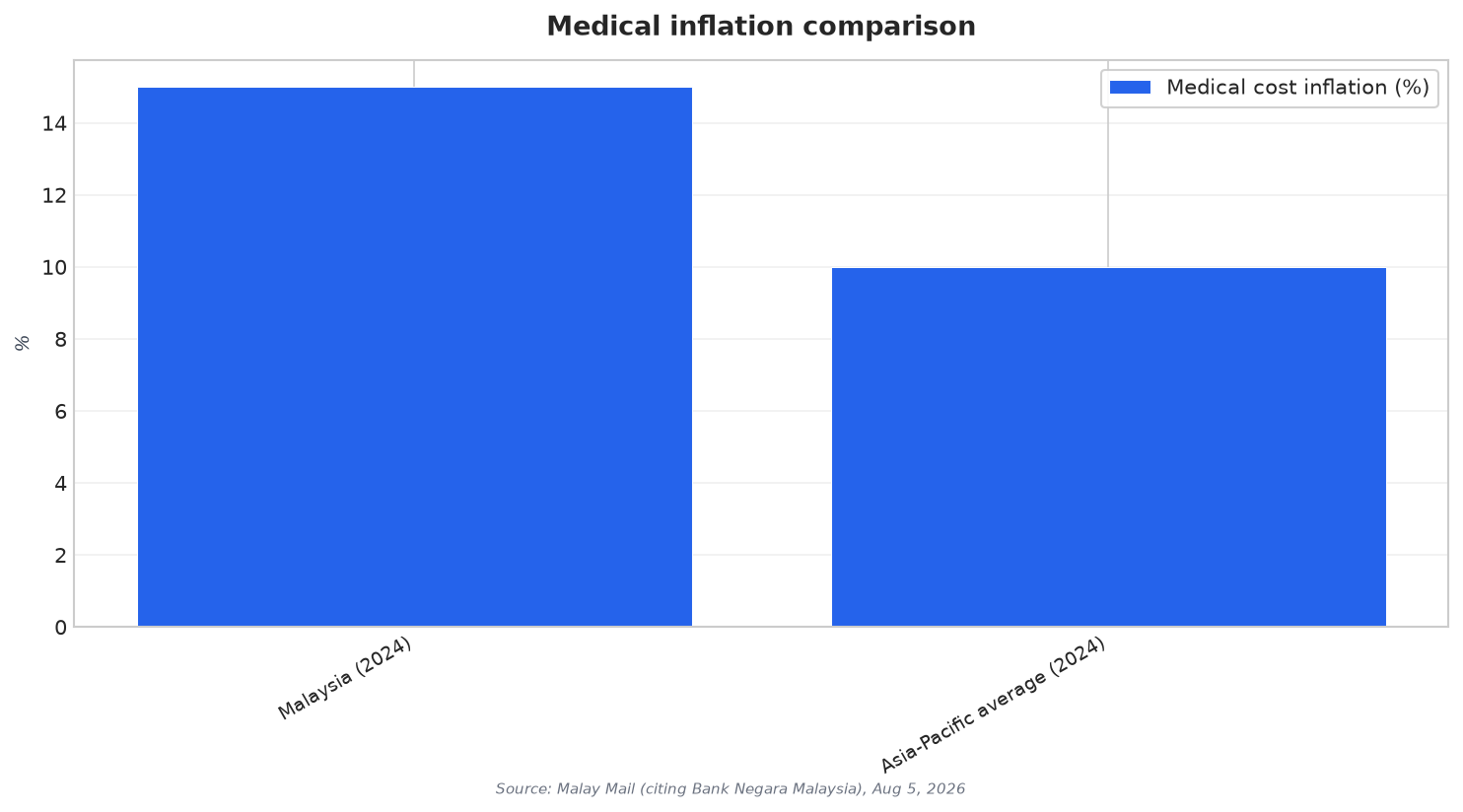
The policy push behind MediAsas Malaysia is tied to rising costs in the system. Bank Negara Malaysia said medical costs in the country rose by 15% in 2024, above the Asia-Pacific average of 10%, and pointed to insurance and takaful claims exceeding premiums collected by insurers and takaful operators. In late 2024, Bank Negara introduced interim measures such as staggered premium increases and a temporary freeze on repricing for policyholders aged 60 and above. Against that backdrop, MediAsas sits as one of 11 key initiatives under RESET, with the intent of keeping private medical protection more sustainable while still leaving participation voluntary.
What MediAsas Covers, What It Costs, and Who Can Join
The basic MediAsas plan is described as starting from RM65 a month, while indicative monthly premiums have also been cited as around RM60 to RM550 for entry ages up to 70, with final national-launch prices not yet published. Eligible Malaysians may enrol any time before turning 70, and coverage can extend until age 85. According to the MHIT White Paper released in early 2026, the basic plan has an annual limit of RM100,000, which increases automatically to RM150,000 once the policyholder reaches 60. With an average hospitalisation cost of about RM9,300 in 2024, that RM100,000 limit was framed as enough for roughly 10 hospital admissions a year.
Benefits focus on core inpatient and emergency needs. The plan includes hospitalisation costs such as room and board, intensive care, and operating theatre fees, plus professional fees like surgical and anaesthetist charges and in-hospital physician visits. It also covers hospital supplies and selected high-cost outpatient medications for serious illnesses (including cancer), as well as ambulance fees and day surgeries. For acute care, it includes outpatient treatment for dengue, influenza A and B, bronchitis, and pneumonia. For people seeking higher protection, a Standard Plus option is described with an annual limit of RM300,000 at premiums below prevailing market rates.
For insurers and patients, the most debated feature is cost-sharing and tighter rules to influence behaviour. One analysis noted a deductible of RM500 per disability for in-network hospitals, and for out-of-network hospitals, an additional co-insurance of 20% of the remaining bill after the deductible, capped at RM3,000 per disability. A separate option, described as MediAsas Fleksi, can have deductibles up to RM10,000 for in-network hospitals and RM15,000 for out-of-network hospitals, with no co-insurance. Critics argue affordability, pointing to a Bank Negara study that found 61% of Malaysians cannot come up with RM1,000 in cash during emergencies. At the same time, exclusions also shape expectations: Bank Negara’s FAQ lists 35 exclusions, with examples highlighted as pre-existing conditions, mental health treatment, and congenital conditions, reinforcing that the product is positioned as protection against future medical shocks rather than comprehensive coverage.
When will MediAsas launch nationwide, and is it mandatory?
How much can the basic plan cover each year?
What do patients typically pay out of pocket under MediAsas cost-sharing?
Are pre-existing conditions covered under the new basic plan?
What is MediAsas Malaysia designed to change for insurers and patients?