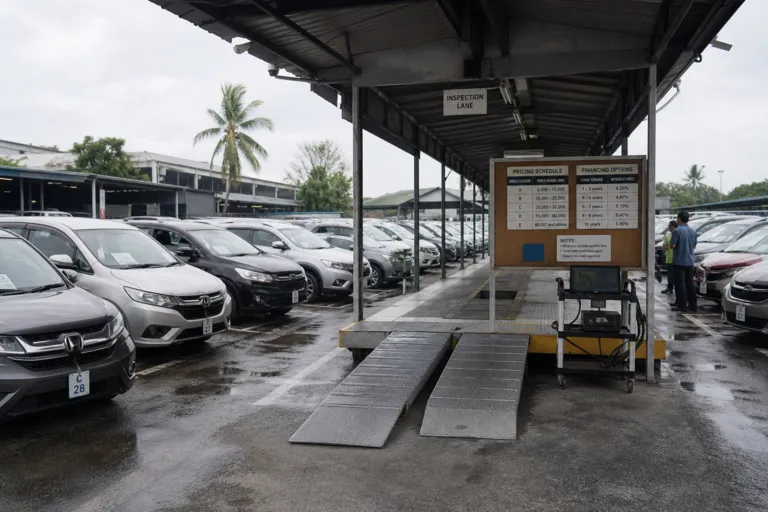
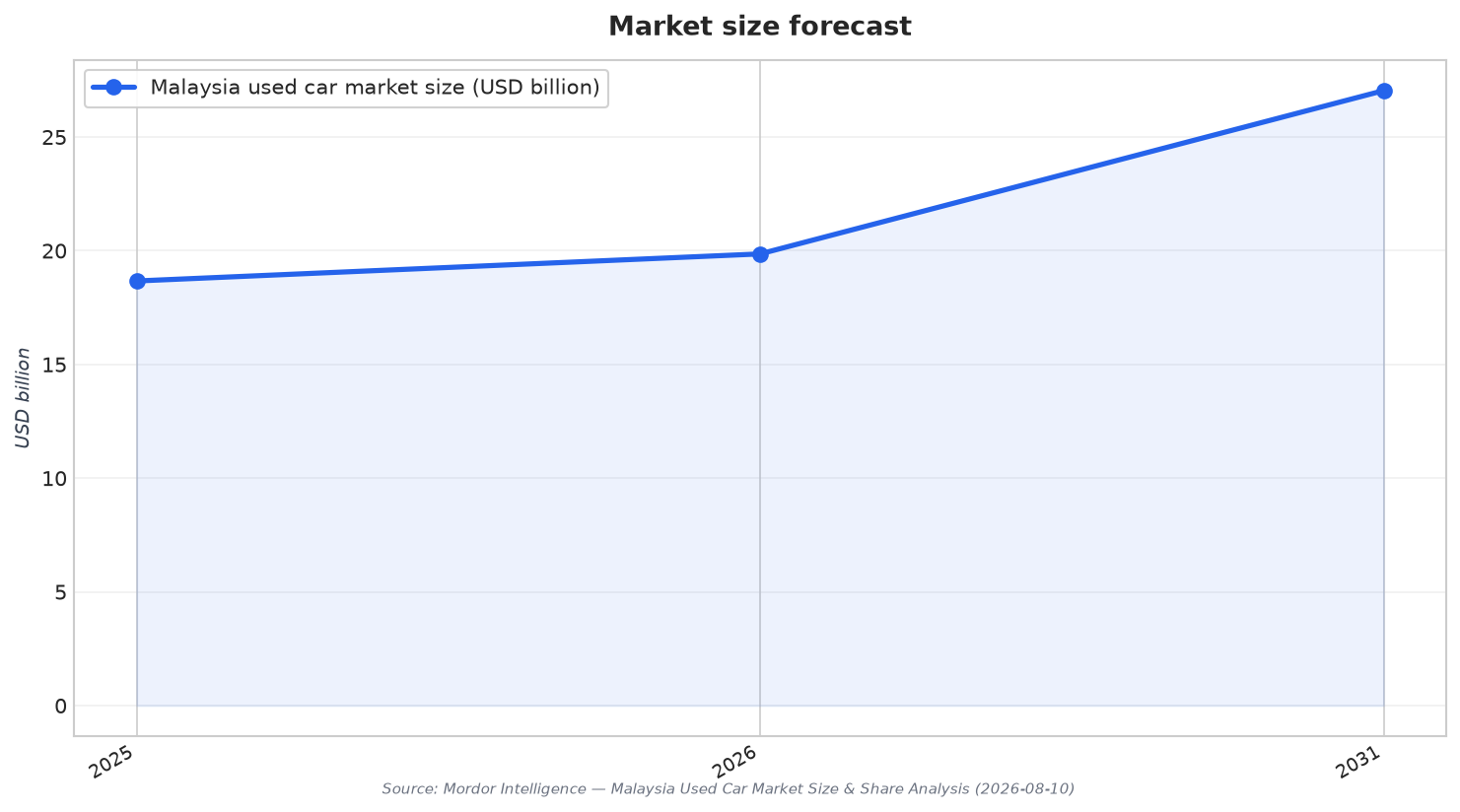
In 2026, the Malaysia used car market sits at the center of broader shifts in pricing, retail formats, and powertrain choices. Mordor Intelligence values the market at USD 18.67 billion in 2025 and estimates it will grow from USD 19.86 billion in 2026 to USD 27.04 billion by 2031, at a 6.36% CAGR (2026–2031). Segment mix also shows where buyers concentrate today. Sedans led with a 37.68% revenue share in 2025, while petrol vehicles accounted for a 75.92% share. Demand is also tilting toward SUVs, which Mordor projects to expand at a 7.03% CAGR to 2031.
Prices are a core driver of used-car demand. Mordor reports new-vehicle sticker prices climbed during 2024 and are expected to rise another 8–20% once excise duty reforms are activated in 2026. That kind of movement can redirect households toward pre-owned options, especially the price band already capturing the largest share. In Mordor’s breakdown, cars priced at USD 5,000–9,999 took 38.12% share in 2025, while the USD 30,000+ tier is projected to grow at a 6.31% CAGR. The age profile reinforces “nearly-new” preferences too, with 3–5 year-old cars at 40.74% share and the 0–2 year cohort expanding at 6.7% CAGR.
Financing and Digital Retail Are Reshaping How Malaysians Buy Used
Financing access and digital processes are increasingly linked to how quickly used inventory turns. Ken Research notes that finance for both used and new cars is readily available in Malaysia and says ownership periods have been decreasing. It also describes a market where the majority share is held by 4–6 year-old cars, and where vehicles with 80,000–120,000 kilometres dominate. On the retail side, Mordor finds offline dealerships still held 50.66% share, but online channels are accelerating (6.61% CAGR). One reason is scale and standardization: Mordor says CARSOME processes more than 100,000 vehicles a year through a 175-point inspection regime and delivers roughly USD 1 billion in revenue.
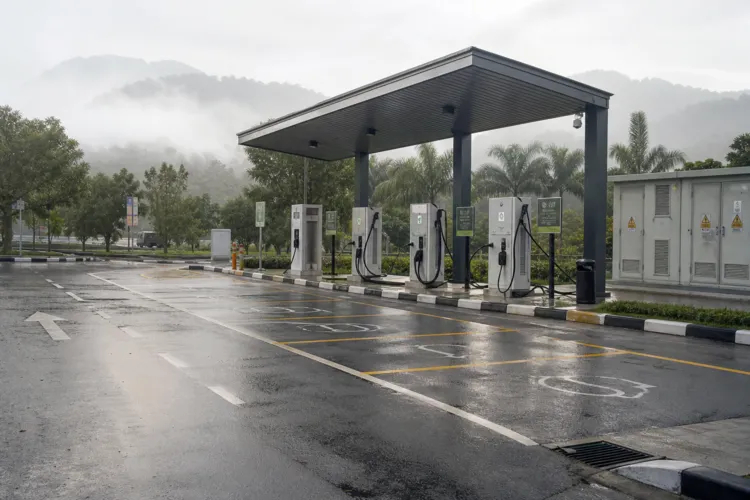
EV momentum in new sales raises a fresh resale question for shoppers. Focus2move reports EV sales in Malaysia are growing by 121.6%, and EVs now account for 10.6% of total industry sales. Listing data suggests the used-EV pool is still narrow and skewed to newer cars. Carvaly’s 14 August 2026 snapshot shows 340,782 Malaysian listings, with 3,571 electric listings (just over one in a hundred). It also reports 88.5% of used EV listings are 2023 or newer, while only 97 listings (2.7%) are model year 2021 or older, and 27 (0.8%) are 2019 or older. The median asking price across used EV listings is RM180,000, and nearly two-thirds sit above RM150,000.
For resale value expectations, transparency and pricing signals matter as much as headline growth. Carvaly finds 521 EV listings (14.6% of the segment) are priced at RM100,000 or below, and highlights the BYD Dolphin with 96 listings at a median of RM66,800, noting it launched in 2023 from RM99,900 and is no longer part of BYD Malaysia’s new-car line-up. It also warns buyers not to assume “used means cheaper,” citing Tesla Model 3 listing medians of RM150,000 for 2023 cars (73 listings) and RM158,000 for 2024 (28 listings). Regionally, a ResearchAndMarkets.com summary carried by GlobeNewswire says Malaysia’s battery passport requirements improve transparency by providing battery state-of-health information, which can help reduce discounts commonly applied to pre-owned EVs.
How big is the Malaysia used car market in 2026?
Which used-car price segment is most common?
What does used EV supply look like in Malaysia in 2026 listings?
Are online platforms meaningfully changing used-car buying?
What could improve confidence in used EV resale pricing?