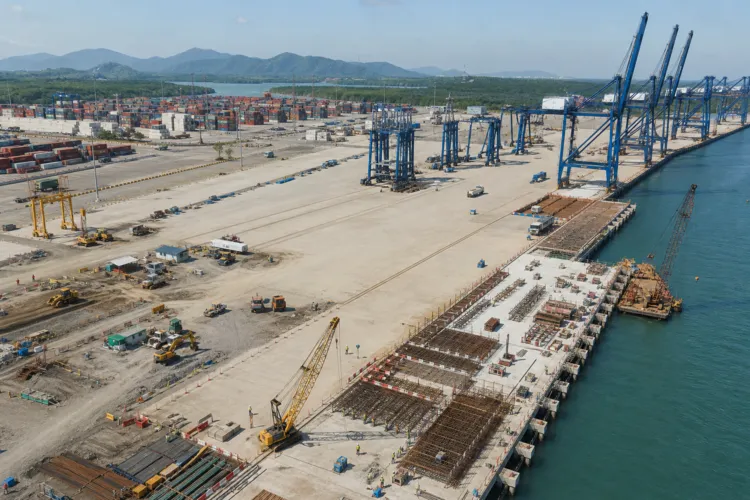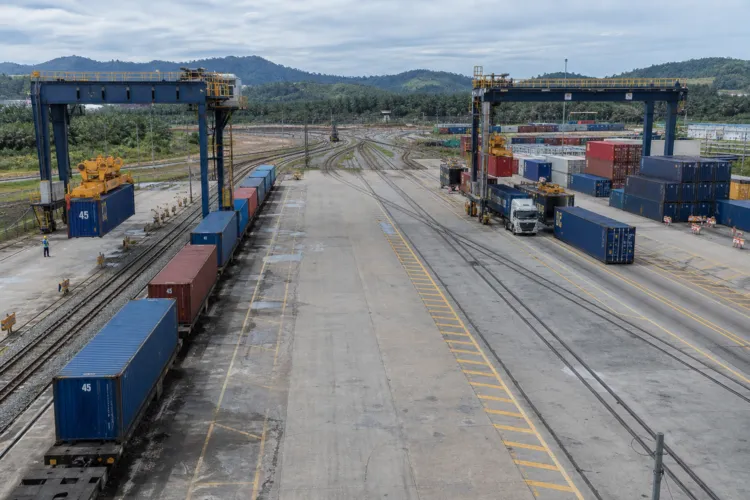
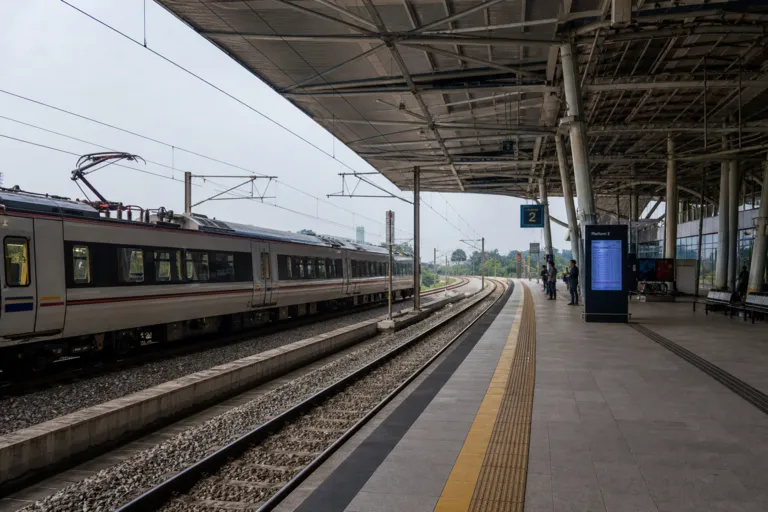
KTM’s Electric Train Service (ETS) is an inter-city higher-speed rail service in Malaysia operated by Keretapi Tanah Melayu (KTM). Introduced in 2010, it was the operator’s second electrified train service after KTM Komuter and Malaysia’s second inter-city rail system after KTM Intercity. ETS operates on the historic KTM West Coast Line in western Peninsular Malaysia, which has since been largely electrified and double-tracked. In Wikipedia’s description, it runs along the full extent of the line, between Padang Besar near the border with Thailand and JB Sentral near the border with Singapore, setting up a single north-south rail spine that ties major cities to a shared timetable.
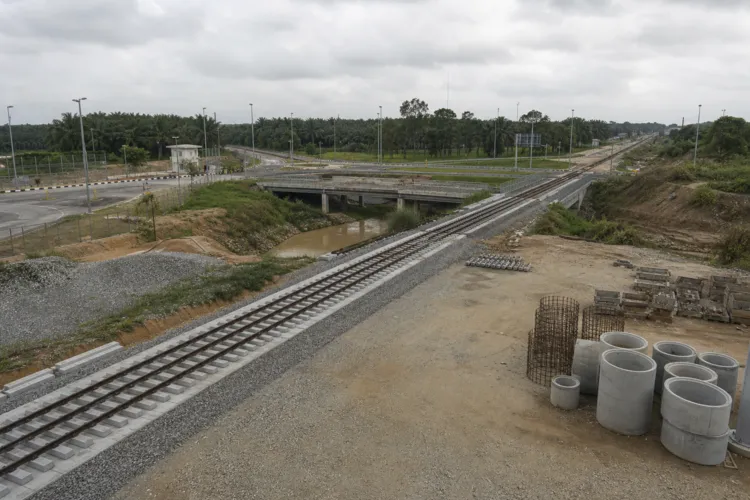
The newest shift is what many travelers feel most: electrified rail now reaching Johor Bahru. The Business Times reported that the new ETS service marks the completion of the 192 km Gemas–Johor Bahru Electrified Double-Tracking Project (EDTP), bringing electric intercity rail to Malaysia’s southernmost city for the first time. With the full stretch open, electrified rail travel is possible from Padang Besar in Perlis to Johor Bahru. For passengers, the Kuala Lumpur–Johor Bahru ETS cuts travel time to about 4 hours and 20 minutes, versus five to seven hours by car or existing diesel services, while KTMB also described a Johor Bahru–Kuala Lumpur Sentral trip as taking around 4½ hours.
What Full North-South Electrification Changes for Riders
Beyond the headline trip time, the change is about reliability and network effect. Transport consultant Wan Agyl Wan Hassan told The Business Times that ETS changes the fundamentals of travel between the two cities and that “for the first time, the journey becomes predictable.” He contrasted this with long highway congestion and the hassle of connecting airport transfers, while noting that electrified rail provides a four-hour to five-hour trip that starts and ends “in the heart of both cities.” Service levels are also being stepped up. KTM currently operates two daily KL–JB ETS services in each direction, and Transport Minister Loke said frequencies would increase to four trips the next month, with further increases in following months.
Ridership and capacity plans show why the corridor matters. Travel And Tour World cited official data from Malaysia’s Ministry of Transport (MOT) that ETS carried 4.17 million passengers in 2025, building on 4.70 million annual journeys recorded across nationwide intercity segments in 2023. The same report said daily ETS ridership consistently registers between 16,400 and 22,100 passenger trips. Looking ahead, MOT infrastructure projections indicate that adding ten new Class 94 trainsets—procured at a cost of RM400 million—will raise network capacity toward 7.5 million annual riders as electrified double tracking extends south through Gemas to Johor Bahru Sentral, aligning rolling stock investment with the newly completed southern link.
In practice, ETS is not framed as “bullet train” speed, but it is positioned as a fast intercity option on metre-gauge infrastructure. Wikipedia lists ETS with a maximum speed of 140 km/h, and Business Traveller described Malaysia’s ETS as cruising between 140–160 kmph while noting faster benchmarks elsewhere, such as 300–350 kmph high-speed services in China and more than 300 kmph in South Korea. Still, the Johor Bahru extension has immediate travel implications: Business Traveller wrote that the electric train connecting Kuala Lumpur and Johor Bahru is faster than the alternative diesel-run line, and that diesel trains can take seven hours for the same route. With ETS now spanning from Padang Besar down to JB Sentral, Malaysia’s intercity rail map becomes simpler: one electrified north-south trunk, expanded frequencies, and clearer time expectations for riders.
How long does the ETS take from Kuala Lumpur to Johor Bahru?
What project completed the electrified link to Johor Bahru?
How many ETS passengers were recorded in 2025, and what is daily ridership like?
What capacity increase is projected with new trainsets on the Malaysia ETS electric train network?
How often do KL–JB ETS trains run, and what changes were announced?