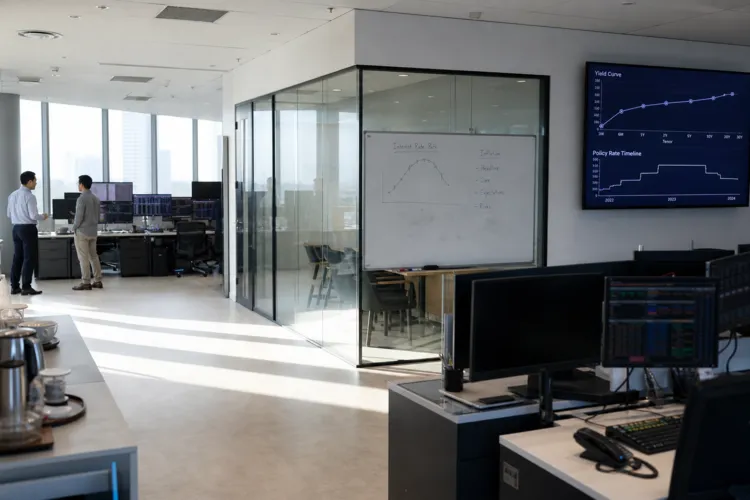

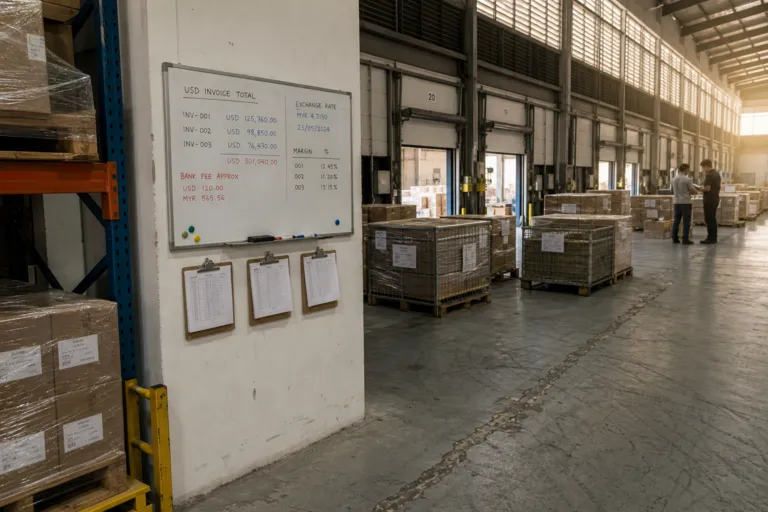
Malaysia’s ringgit strength has become a double-edged story for exporters. In 2025, the ringgit appreciated nearly 10% against the US dollar and was described as Asia’s best-performing currency. For consumers, the benefits can feel immediate when overseas spending becomes more affordable. For exporters, the arithmetic works in the opposite direction, because much of global trade is priced in US dollars. When the ringgit rises, exporters receive fewer ringgit for the same USD invoice, and that translation effect can compress profit margins even if unit volumes hold up.
The margin squeeze is easy to illustrate. One example compares a product priced at US$100: at RM4.80 per dollar the exporter receives RM480, but at RM3.9 per dollar the same sale yields RM390. On paper, that is a near 20% drop in ringgit revenue from exchange rate movement alone. This is why analysts often warn about competitiveness and earnings when the currency strengthens. Yet it is also why corporate responses matter, including how firms manage procurement costs, US dollar exposures, and decisions on when to convert export proceeds.
Which Exporters Feel It Most, and Why the Pain Is Uneven
Research commentary has pointed to export-oriented sectors with largely US dollar-denominated revenue and limited offsetting US dollar costs as being more exposed to a firmer ringgit. Hong Leong Investment Bank listed gloves, technology, electronics manufacturing services, upstream oil and gas, petrochemicals, and metal producers as areas that could be negatively affected by appreciation. By contrast, the same note argued domestic-driven sectors can benefit when a stronger ringgit lowers import and procurement costs, naming aviation, automotive, cement, construction, consumer, media, renewable energy, real estate, and telecommunications. The implication is clear: currency moves do not land evenly across Corporate Malaysia.
Latex glove makers show how quickly FX can flow into results. Top Glove’s first-quarter earnings were hurt even as year-on-year sales volume grew 17%, because average selling prices fell 11% amid a weaker US dollar against the ringgit. Analysts also highlighted that over 90% of glove manufacturers’ sales proceeds are denominated in US dollars, making persistent USD softness versus the ringgit a profitability headwind. Hartalega reported a 24% on-year decline in first-half earnings, and Kenanga Investment Bank cut its net profit forecast by 12% on missed expectations and lower-than-expected sales volume. Supermax’s first-quarter losses more than doubled on-year to RM134.6 million, and its shares fell as much as 6.8% on Dec 1 following results.
Still, the broader export narrative is not only about FX. Malaysia is highly trade-oriented: World Bank data cited trade volume at about 1.37 times GDP. Even with ringgit appreciation, exports in the fourth quarter of 2025 repeatedly reached record highs, peaking at RM153 billion in December. Separately, currency strength also shows up in cross-border trading conditions: the ringgit strengthened to 3.087 against the Singapore dollar on Mar 11, nearly 13.5% higher from its February 2024 trough of 3.568, and businesses warned that stronger levels can squeeze margins for firms selling into Singapore and global markets. The practical takeaway for Malaysia ringgit strength exporters is that FX can pressure earnings translation, but structural competitiveness and demand cycles can still drive headline export outcomes.
How does a stronger ringgit reduce exporters’ ringgit revenue on USD sales?
Which sectors were flagged as most exposed to ringgit appreciation?
What recent figures show pressure on glove makers from currency moves?
Did Malaysia’s exports fall when the ringgit strengthened?
What does the keyword topic—Malaysia ringgit strength and exporters—mean in practice?