
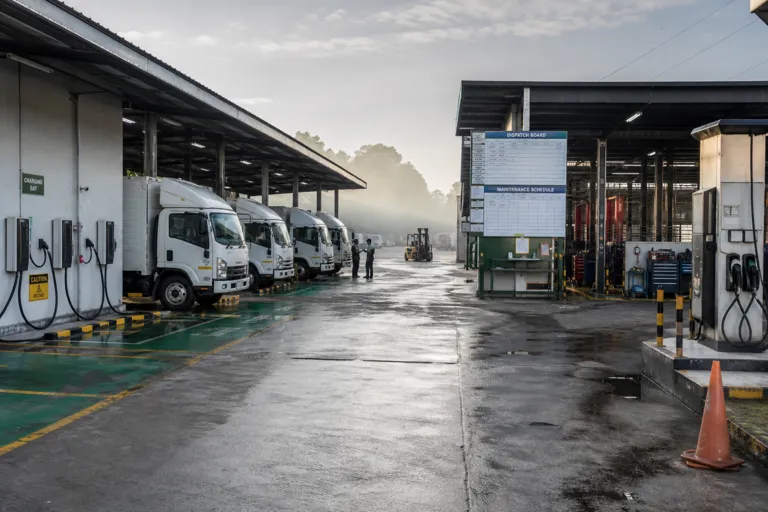
Fleet operators in Malaysia are making truck technology decisions under two pressures at once. They need better operating economics per kilometer, and they need compliance advantages when bidding on public sector and large corporate contracts with embedded sustainability requirements. In the road freight market, fleet renewal is described as improving cost competitiveness and reducing fuel consumption per kilometer, with electrification currently concentrated in urban last-mile operations where duty cycles fit available battery range. For long-haul routes, operators are moving to Euro-4M compliant diesel as an interim improvement step ahead of eventual electrification, reflecting a staged approach rather than a single “flip-the-switch” transition.
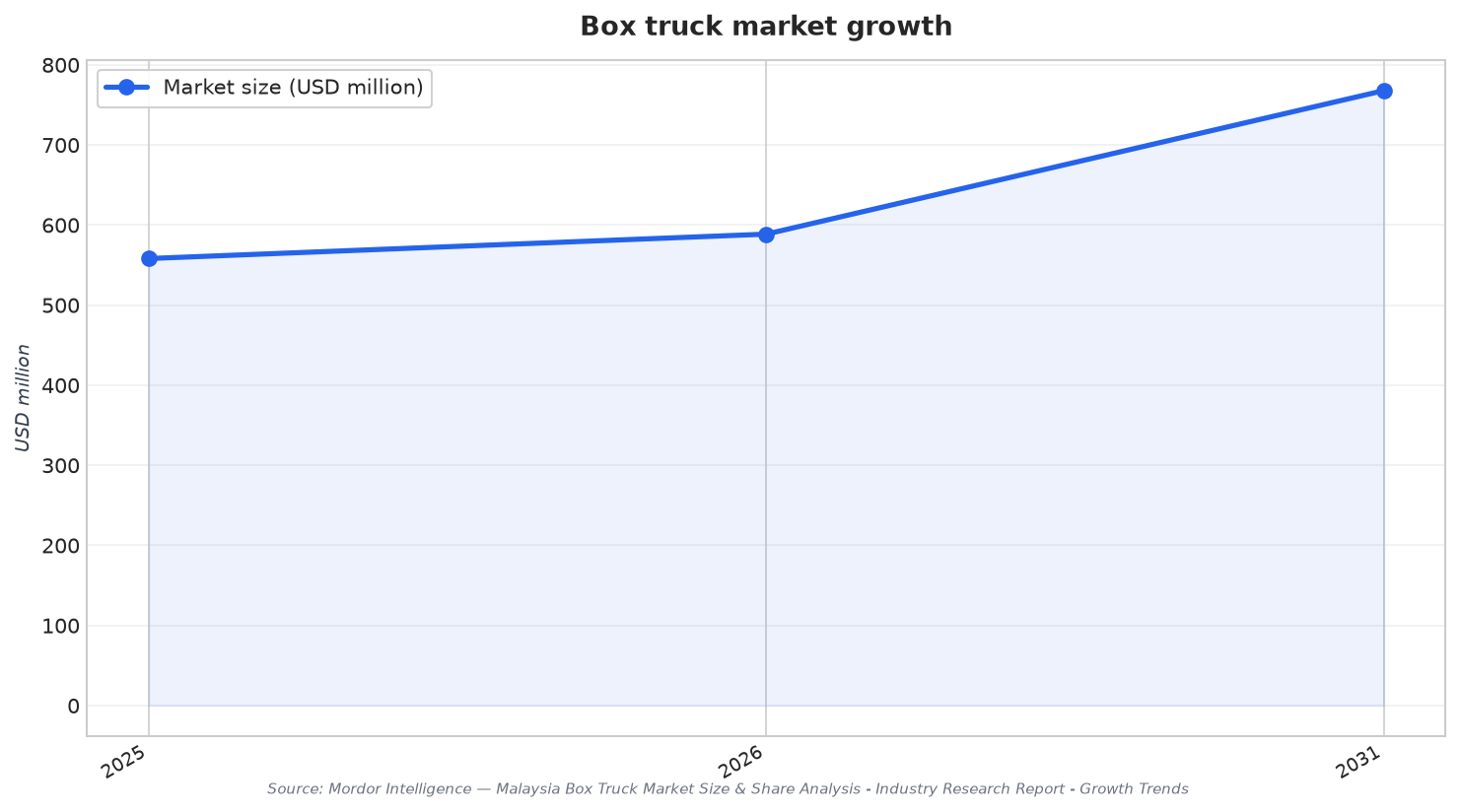
That staged approach shows up clearly in Malaysia’s box truck segment, where last-mile dynamics are strong. The market is estimated at USD 558.23 million in 2025 and USD 588.71 million in 2026, with projections of USD 767.91 million by 2031 at a 5.46% CAGR (2026–2031). In 2025, diesel still accounted for 85.62% of box truck share, but electric variants are cited as the fastest-expanding fuel type with a 6.04% CAGR through 2031. Light-duty units held 53.05% share in 2025, reinforcing why pilots often start with shorter, stop-and-go routes common to e-commerce and parcel delivery.
Where the Numbers Start to Matter in Fleet Business Cases
Policy signals are increasingly specific, which helps fleet operators turn sustainability intent into a financeable plan. Malaysia’s Low Carbon Mobility Blueprint targets 15% electric commercial vehicle adoption by 2030, alongside incentives that include road-tax exemptions and charging infrastructure subsidies. Separately, the government’s implementation of Euro-4M truck emission standards and import duty exemptions for qualifying electric commercial vehicles is described as accelerating replacement of older trucks with more fuel-efficient, lower-operating-cost modern vehicles. For Malaysia electric truck adoption to scale beyond pilots, operators often need this combination: clear compliance rules, targeted exemptions, and infrastructure support that reduces execution risk.
Real deployments in industrial corridors also shape the cost-benefit narrative. In 2025, Nippon Express Holdings expanded electric truck fleet deployment in Malaysia’s major industrial corridors, focusing on short-haul routes between Port Klang, Penang industrial estates, and Selangor manufacturing parks. The stated rationale is route density and predictable daily mileage, which enable cost-effective battery-electric operations. This pattern matters because it aligns the technology with operational reality: repeatable routes, controlled dwell time, and depot-based charging planning. It also mirrors broader commercial electrification commentary that highlights improving charging infrastructure and declining battery costs as supportive tailwinds.
For LNG and other lower-carbon options, Malaysia’s logistics market commentary points to sustainability as a competitive lever rather than a single technology bet. As multinational shippers adopt Scope 3 emissions reporting, demand for verified low-carbon transport options is rising. Bursa Malaysia’s enhanced sustainability reporting requirements, effective 2025, also compel listed logistics firms to disclose Scope 1 and Scope 2 emissions. Within that context, the market discussion references operators investing in Euro VI truck fleets, LNG-powered vessels, and carbon accounting platforms to protect renewals with ESG-conscious principals. Meanwhile, adjacent electrification lessons from industrial trucks underscore execution details: aftermarket service can represent an estimated 40–50% of lifecycle spend, and shortages of certified technicians can constrain uptime—practical considerations fleets must plan for when shifting powertrains.
How is Malaysia’s electric truck adoption evolving in fleet operations?
What policy targets and incentives support electric commercial vehicles in Malaysia?
What does the Malaysia box truck market data suggest about electrification momentum?
Where are electric trucks being deployed in Malaysia according to reported examples?
What operational risks should fleets consider when electrifying?