Digital health in Malaysia is moving from experimentation to wider service delivery, with telemedicine platforms, health apps, and hospital integrations becoming more visible across the care journey. Ken Research values Malaysia’s digital health and telemedicine market at approximately USD 1.1 billion, linking momentum to the adoption of digital health solutions and the impact of COVID-19 on healthcare delivery. The same market view segments activity across teleconsultation, remote patient monitoring, health management apps, digital therapeutics, wearable devices, telepharmacy, and electronic health records (EHR). Within that mix, teleconsultation is positioned as the leading sub-segment because it improves convenience and accessibility by enabling remote consultations with healthcare professionals.
Telemedicine growth is also being shaped by practical constraints that affect who can use it consistently. Ken Research notes that limited internet access in rural areas remains a barrier, stating that approximately 23% of rural Malaysians lack reliable internet access, which can restrict the reach of virtual care. At the same time, the demand for remote healthcare services during the pandemic helped reinforce teleconsultation’s role, while consumer interest in mobile health applications and wearable devices signals a desire for real-time monitoring and more personalized care. In practice, Malaysia’s telemedicine landscape includes a mix of regional and international players such as DoctorOnCall, BookDoc, Teleme, Doctor2U (by BP Healthcare Group), GetDoc, HealthMetrics, Naluri, Qualitas Health, Alpro Pharmacy, Speedoc, Caring Pharmacy, MyDocLab, Homage Malaysia, MedKad, and Pulse by Prudential.
EMRs, EHRs, and the Push Toward Data Sharing
Beyond virtual visits, Malaysia’s digital health direction increasingly depends on how well clinical data can be captured, exchanged, and used across settings. Grand View Research points to EMR and EHR adoption as a key growth factor for digital health in the region and adds a Malaysia-specific detail: Malaysia has already established a national warehouse that enables data sharing between public hospitals. This kind of infrastructure can support continuity of care when patients move between facilities, and it also creates a foundation for more advanced digital services that rely on longitudinal records. In market segmentation terms, EHR is treated as part of the broader digital health ecosystem rather than a standalone IT upgrade.
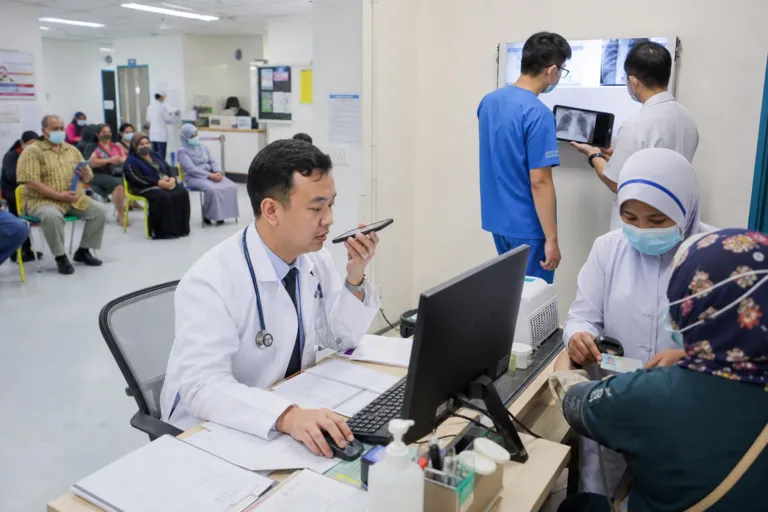
Hospitals are central to how Malaysia’s digital health tools are being operationalized. Ken Research describes hospitals as the dominant end-user segment, citing increased adoption of digital health solutions to enhance patient care and streamline operations. It also notes that integrating telemedicine into hospital services can help manage patient flow and reduce wait times, while clinics and home care providers are expanding their use of digital platforms to improve reach and efficiency. Nexdigm adds that integrating AI, robotics, and telemedicine into healthcare services can improve patient care and operational efficiency, and it frames future growth around technological advancement, government support, and increasing healthcare demand across public and private sectors.
AI diagnostics is the next layer gaining attention as Malaysia’s ecosystem evolves from connectivity to clinical decision support. Ken Research’s Malaysia healthcare AI and diagnostics coverage cites growth drivers such as increasing demand for personalized medicine, rising healthcare expenditure, advancements in AI technology, and government initiatives that promote digital health solutions. It also highlights challenges that must be addressed for successful adoption, including data privacy concerns, high implementation costs, lack of skilled workforce, and regulatory hurdles. Still, opportunities include expanding telemedicine services and integrating AI in diagnostics, alongside trends such as AI-driven predictive analytics and a focus on patient-centric solutions. Taken together, these factors show Malaysia Digital Health Adoption is increasingly about combining access, interoperable records, and AI-enabled diagnostics support while navigating privacy, cost, and capability constraints.
What is driving digital health growth in Malaysia right now?
Why does teleconsultation lead Malaysia’s digital health segments?
What is the EMR/EHR data-sharing situation in Malaysia?
What barriers can slow Malaysia’s telemedicine reach?
What does Malaysia Digital Health Adoption mean for AI diagnostics in practice?