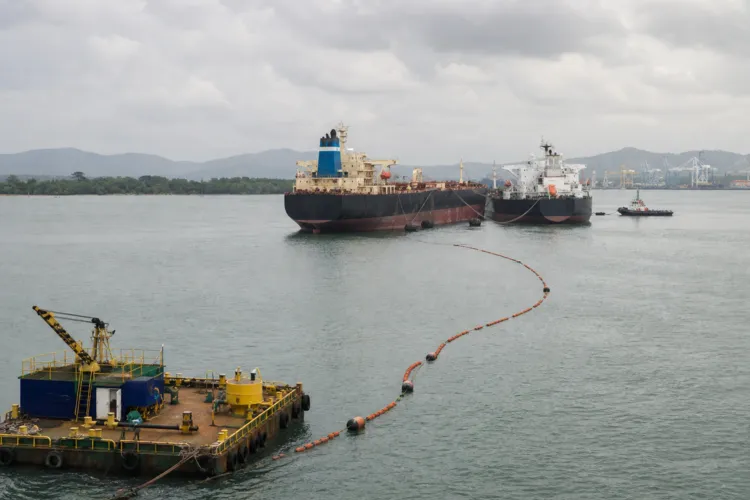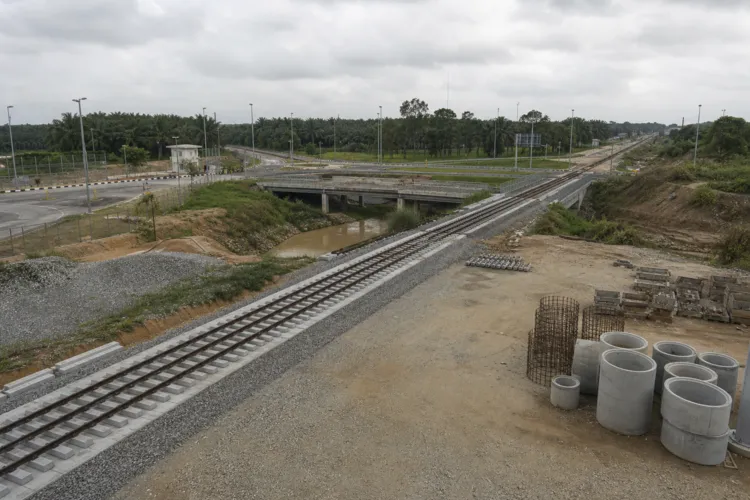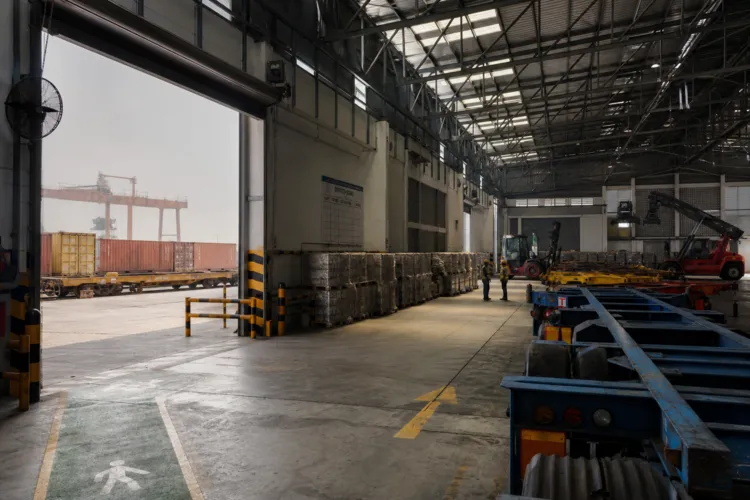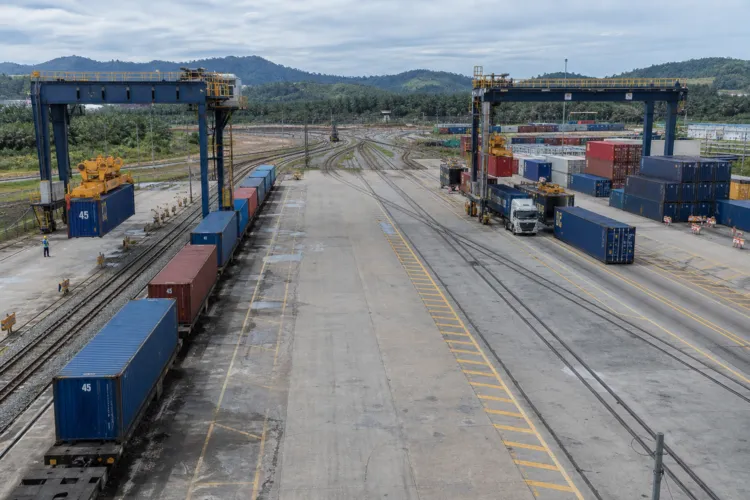
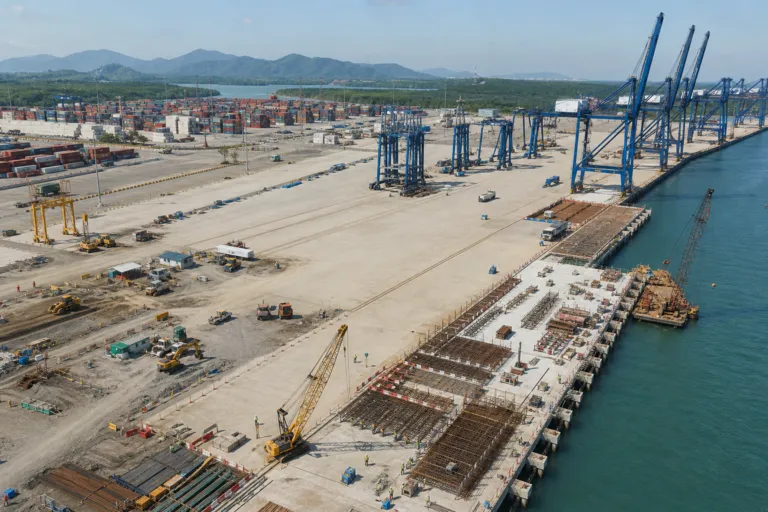
Malaysia has set out a clear ambition for Malaysia port capacity 2035. Transport Minister Anthony Loke said Putrajaya is targeting 100 million TEU in national port-handling capacity by 2035, supported by a new port on Carey Island and expansions at existing ports. He linked the expansion drive to the Malaysia Maritime Transformation Plan 1.0, where expanding port infrastructure and handling capacity are stated priorities to keep Malaysia competitive as a global maritime and logistics hub. The Cabinet approved the development of Port Klang’s third terminal on Carey Island on March 11, with the Selangor government leading the project through a special purpose vehicle, while the Transport Ministry acts as regulator. Loke has said the terminal would take nearly 20 years to be fully completed.
Recent container throughput figures are being used to frame the scale of the ambition. In the Lloyd’s List One Hundred Container Ports 2026 ranking, Port Klang retained its position as the world’s 10th busiest container port, handling 15,138,772 TEU in 2025, up 3.4% from 14,644,527 TEU in 2024. The Port of Johor ranked 11th, handling 15,110,050 TEU in 2025, with Loke noting this reporting entity combines the container throughput of Port of Tanjung Pelepas (PTP) and Pasir Gudang Port after Lloyd’s List approved their consolidation for ranking purposes in May. Together, Port Klang and the Port of Johor handled more than 30.2 million TEU in 2025, showing why capacity expansion is now a central policy theme.
PTP, Westports 2, and Role-Based Port Planning
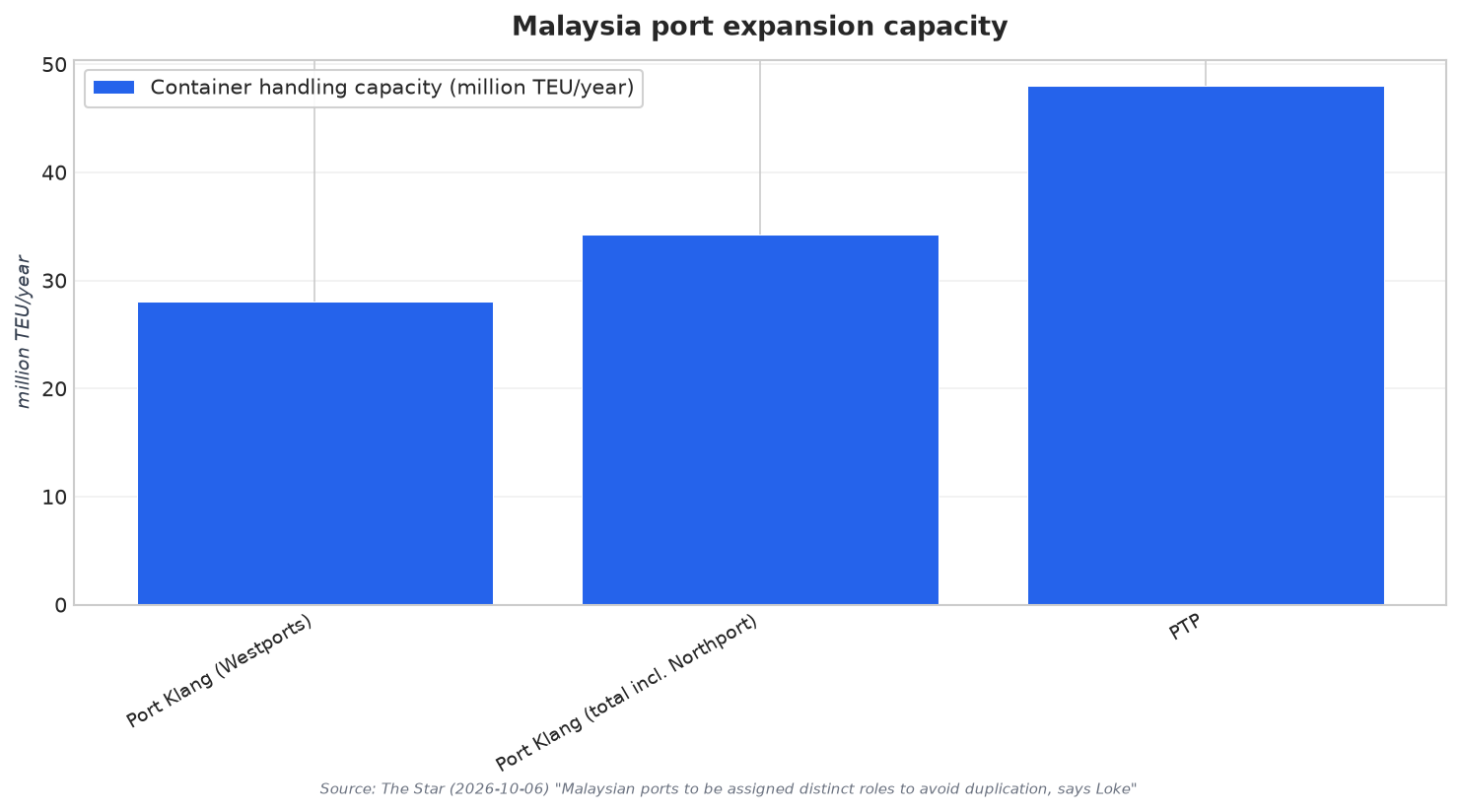
The expansion pipeline spans both Klang Valley and southern Johor. Loke has said Malaysia will pursue the target through Westports 2 expansion at Port Klang, Phases 3 and 4 of the Port of Tanjung Pelepas development, and the Kuantan and Kemaman Port expansions, alongside Carey Island. In Parliament, Loke said Westports Malaysia Sdn Bhd’s expansion of container berths CT10 to CT17 at Port Klang is expected to raise Westports’ handling capacity to 28 million TEUs and bring total Port Klang handling capacity, including Northport Terminal, to 34.2 million TEUs. He also said PTP’s expansion plans are expected to raise its container-handling capacity to 48 million TEUs annually. In the same policy direction, Loke said major ports along the Straits of Malacca will be assigned distinct roles to avoid overlapping functions, with Port Klang positioned as a main gateway and central transshipment hub and PTP as the southern transshipment hub.
Operational context matters because much of the container business is transshipment rather than domestic cargo. One industry guide notes that over 90% of PTP’s traffic is transshipment and that 55.5% of Port Klang’s traffic is also transshipment. The same source states Singapore handled 44.5 million containers in 2025, more than both major Malaysian ports combined, highlighting the competitive reality Malaysia is navigating. It also reports record performance in 2025, including Port Klang’s 15.14 million containers and PTP’s 14.03 million, and notes that MMC Ports group as a whole moved over 20 million TEU across its terminals. These details help explain why policy focus is split between growing berth capacity and sharpening each port’s role in a crowded regional market.
Beyond the two largest hubs, expansion and upgrade narratives also include Penang and Kuantan. MMC Ports operates PTP, Penang Port, Northport in Port Klang, and Johor Port, among others, and reported FY2024 net profit of RM636.56 million on revenue of RM4.36 billion, while Westports posted RM897.98 million net profit on revenue of RM2.34 billion. Historical container throughput data provides another lens: CEIC reports Penang container throughput at 1,165.733 TEU thousand in 2012 (down from 1,198.843 TEU thousand in 2011), while Kuantan was reported at 147.041 TEU thousand in 2017 (up from 128.897 TEU thousand in 2016). Loke has also tied port growth to Malaysia’s trade profile, saying maritime transport accounts for approximately 98% of Malaysia’s international trade and the shipping and maritime services sector contributes more than 6.5% of gross domestic product.
What is Malaysia targeting for national port-handling capacity by 2035?
How do Westports and Port Klang capacity projections change under current expansion plans?
What capacity level has been cited for PTP after its planned expansion?
Why does transshipment matter in Malaysia’s port expansion story?
What does the Malaysia port capacity 2035 plan include besides Port Klang and PTP?