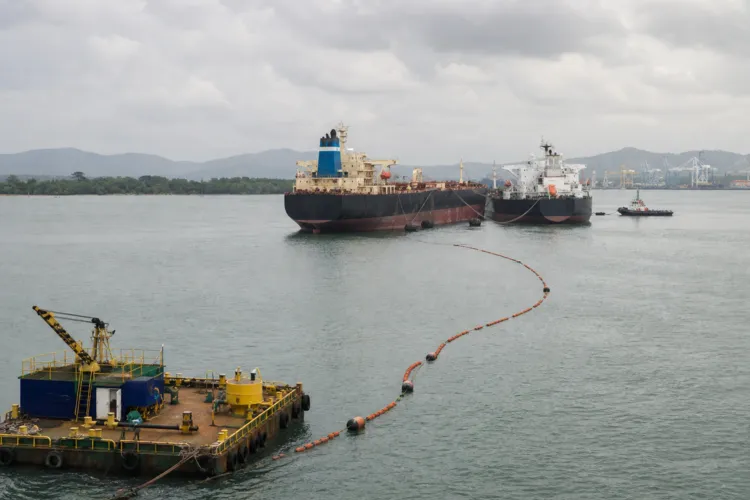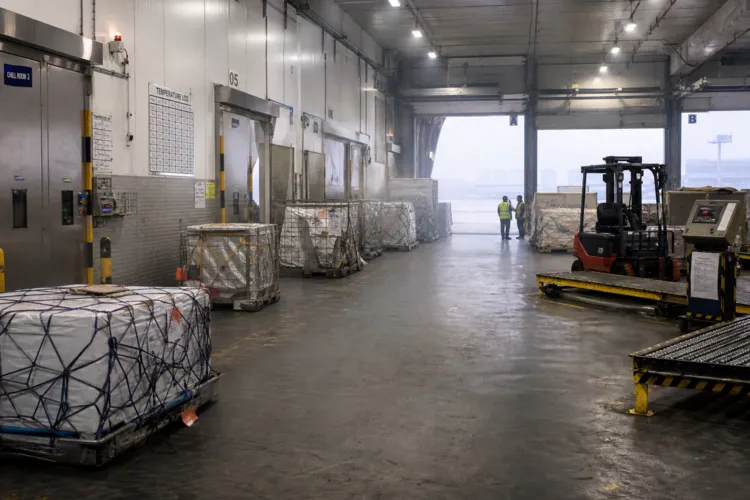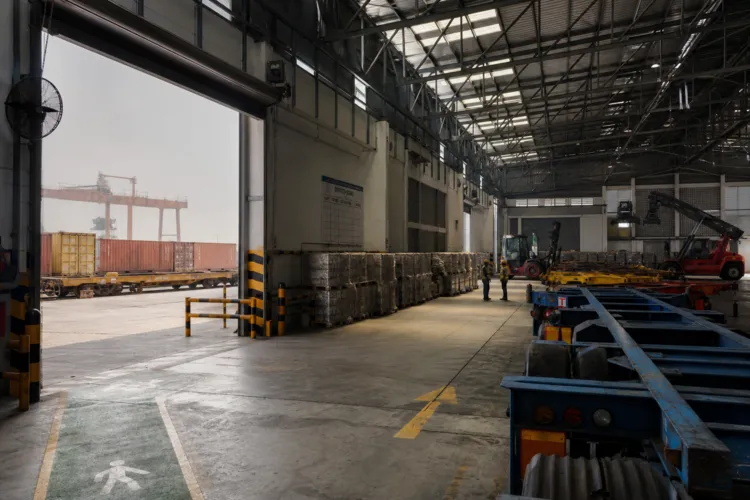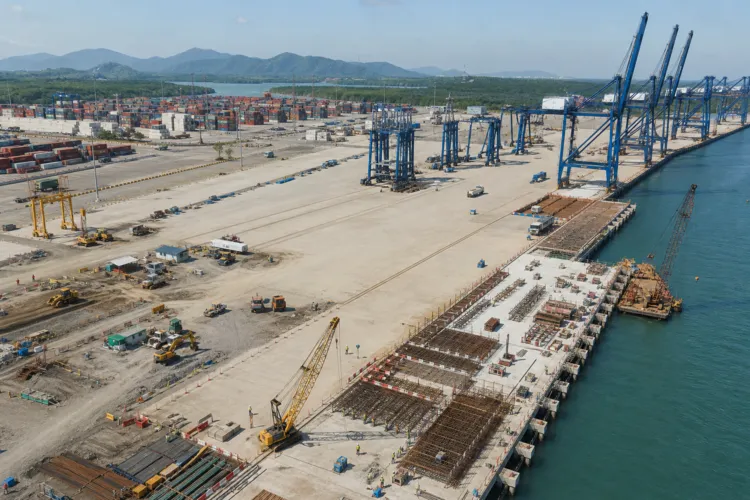
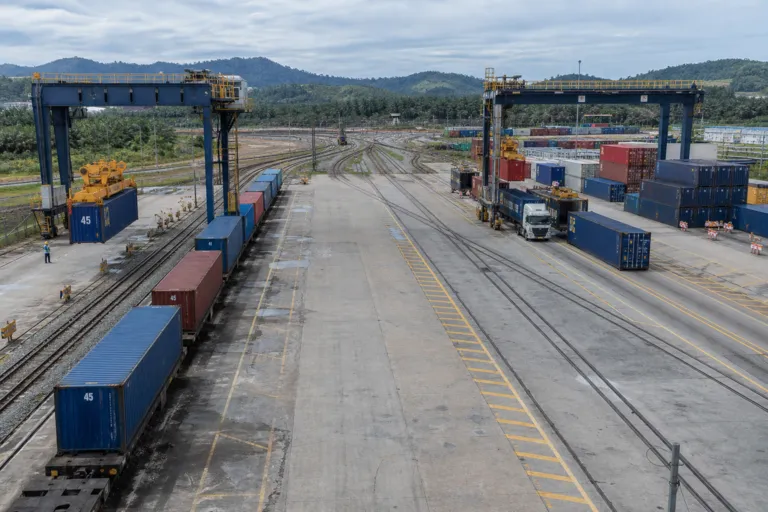
Container logistics in Malaysia still leans heavily on trucks. Road haulage handles roughly 55% of total freight tonnage, linking industrial hinterlands to the country’s main port gateways. At the same time, the Central Region—anchored by Selangor, Kuala Lumpur, and Port Klang—accounts for roughly 44.6% of total freight throughput, reflecting how concentrated demand is around the west coast’s manufacturing and export ecosystem. Port Klang alone handled over 14.2 million TEUs in 2024, and operational pressure is visible in yard utilization above 90% and average vessel waiting times of 1.3–1.46 days. Those constraints sharpen the case for alternatives that can move boxes efficiently between ports and inland nodes.
This is where the ECRL and its port connections matter. Market reporting states the government has committed over MYR 9 billion to the ECRL, and the project is framed as a direct link between the South China Sea coast and the Strait of Malacca. On a practical level for shippers, the promised impact is time: upon completion, freight transit time between Kuantan Port and Port Klang is expected to be reduced by roughly 50%. Sources also describe how shippers can pre-negotiate overflow capacity through Kuantan Port and the ECRL land bridge, routing containerized cargo overland between the two coasts. That positioning makes the ECRL port spur concept less about a single rail line and more about building dependable, bookable routing options when a primary gateway is strained.
What Will It Take for Rail to Pull Containers Off the Road?
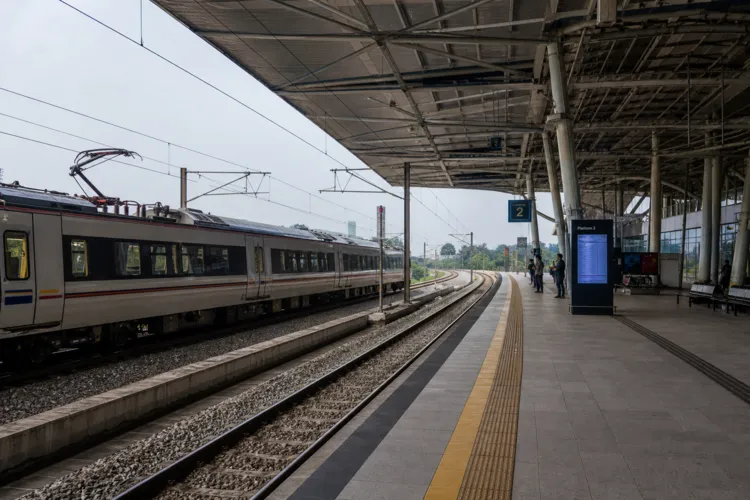
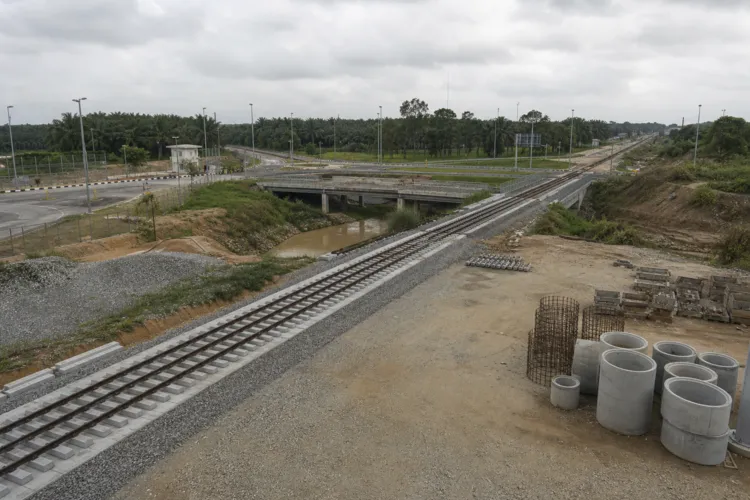
Rail’s ability to absorb more container traffic depends on readiness, service patterns, and network fit. The ECRL is described as a 665 km project that is 78.5% complete, with Phase 1 slated to start in January 2027. That timeline matters because modal shifts typically follow when shippers can plan around consistent schedules and end-to-end handoffs. Existing rail freight activity shows there is already a base to build on. Sources note 45 cargo train services daily with 23 routes daily, and they also state KTMB runs 37 freight train services daily, with about 70% to 80% of activity concentrated in the Northern sector. Expanding meaningful container flows will require extending that kind of frequency and reliability to corridors that connect ports, inland container terminals, and industrial centers that actually generate the box volumes.
Rail does not need to replace trucks to change the logistics mix; it needs to reduce long-haul trucking where congestion and cost pressure are most acute, while leaving drayage to road hauliers at both ends. One explicit example of this model is already in planning context: an approved KL–Bangkok rail freight service slated for late 2025 is expected to shuttle containers on a 1,500 km trunk, with road operators handling first- and last-mile moves. In parallel, administrative frictions on road corridors are being addressed through the ASEAN Customs Transit System pilot on the North–South route for Malaysia–Singapore–Thailand truck journeys. Together, these details underline a likely near-term reality: container diversion to rail will be selective, focused on corridors where a rail trunk can deliver predictable transit and where the port-rail interface—such as ECRL-linked Kuantan Port to Port Klang—offers a clear alternative routing logic.
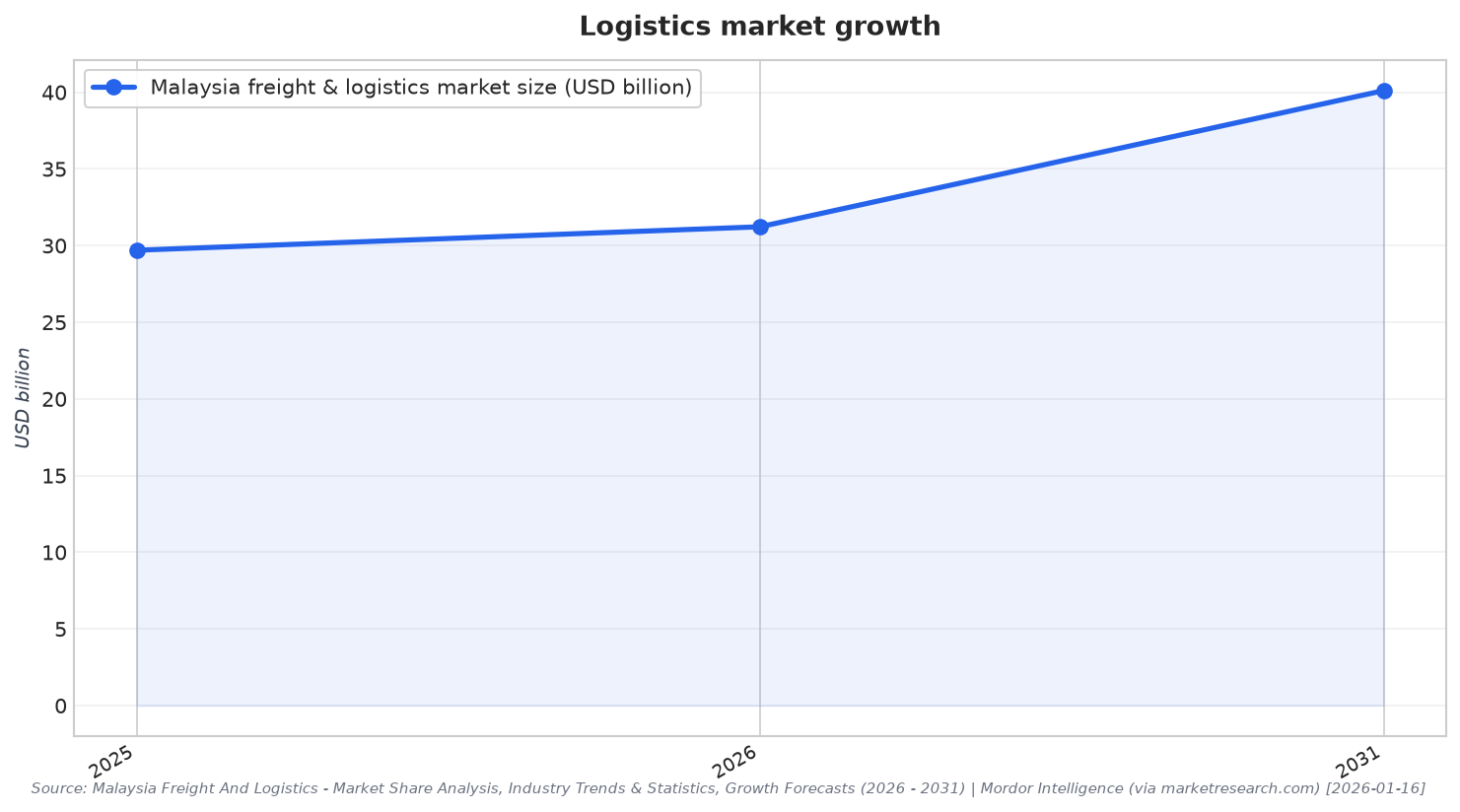
The broader market backdrop suggests shippers will keep seeking capacity and resilience across modes. The Malaysia freight and logistics market is expected to grow from USD 29.70 billion in 2025 to USD 31.23 billion in 2026, and is forecast to reach USD 40.11 billion by 2031 at a 5.14% CAGR over 2026–2031. Investment momentum is also highlighted by record MYR 378.5 billion investment approvals in 2024, and by project financing that includes a MYR 4.5 billion SDG sukuk. Against that demand curve, rail becomes most compelling when it is attached to specific operational pain points: Port Klang’s high utilization, the need for overflow options, and the appeal of a cross-peninsular land bridge with a roughly 50% transit-time reduction between Kuantan Port and Port Klang. That is why discussion about Malaysia rail freight is increasingly tied to port spurs and multimodal nodes, not rail in isolation.
Can the ECRL realistically move more containers off Malaysian roads?
What is the ECRL project timeline mentioned in the sources?
How busy is Port Klang, and why does that matter for mode shift?
What do the sources say about current rail freight service levels in Malaysia?
What does the keyword topic—Malaysia rail freight—look like in practice for cross-border containers?