Malaysia’s 2026–2030 planning cycle points businesses toward a defined pipeline of public spending, reforms, and targeted incentives. Investor-facing commentary describes total outlays of RM611 billion for the period, including RM430 billion of federal development spending, RM120 billion from government-linked investors, and RM61 billion through public-private partnerships. The same outlook guides annual growth at 4.5% to 5.5% and plans for the fiscal deficit to narrow to below 3% of GDP by 2030. For project developers, suppliers, and service firms, these figures matter because they shape tender volumes, counterparties, and the delivery conditions that sit around infrastructure, education, and healthcare priorities.
Tax and compliance planning is another near-term priority that can shift investment math and contract pricing. From 1 July 2025, Malaysia widened the scope of sales and service tax (SST). Sales tax ranges from 5% to 10% on selected goods, while service tax now covers leasing, construction, many fee-based financial services, and defined private healthcare and education. Most newly scoped services are taxed at 8%, while some remain at 6%; private healthcare for Malaysians stays exempt. A transition window until the end of 2025 gives firms time to adjust, but businesses still need clean cutover dates in contracts and invoices to manage cash flow and audit risk.
Where Capital and Incentives Are Pointing in 2026–2030
Two investment channels stand out: special economic incentives and capital market mobilisation. The Johor Singapore Special Economic Zone is described as a flagship cross-border platform in this cycle, offering a 5% corporate tax rate for qualifying activities for up to 15 years and a 15% personal tax rate for eligible knowledge workers for up to 10 years, with applications open until 31 December 2034. Approvals are handled by the Malaysian Investment Development Authority and tied to conditions on spending, headcount, and timing, with benefits unlocking against dated milestones. This structure matters for businesses in data centers and advanced manufacturing that require scalable sites, reliable power, and cross-border talent.
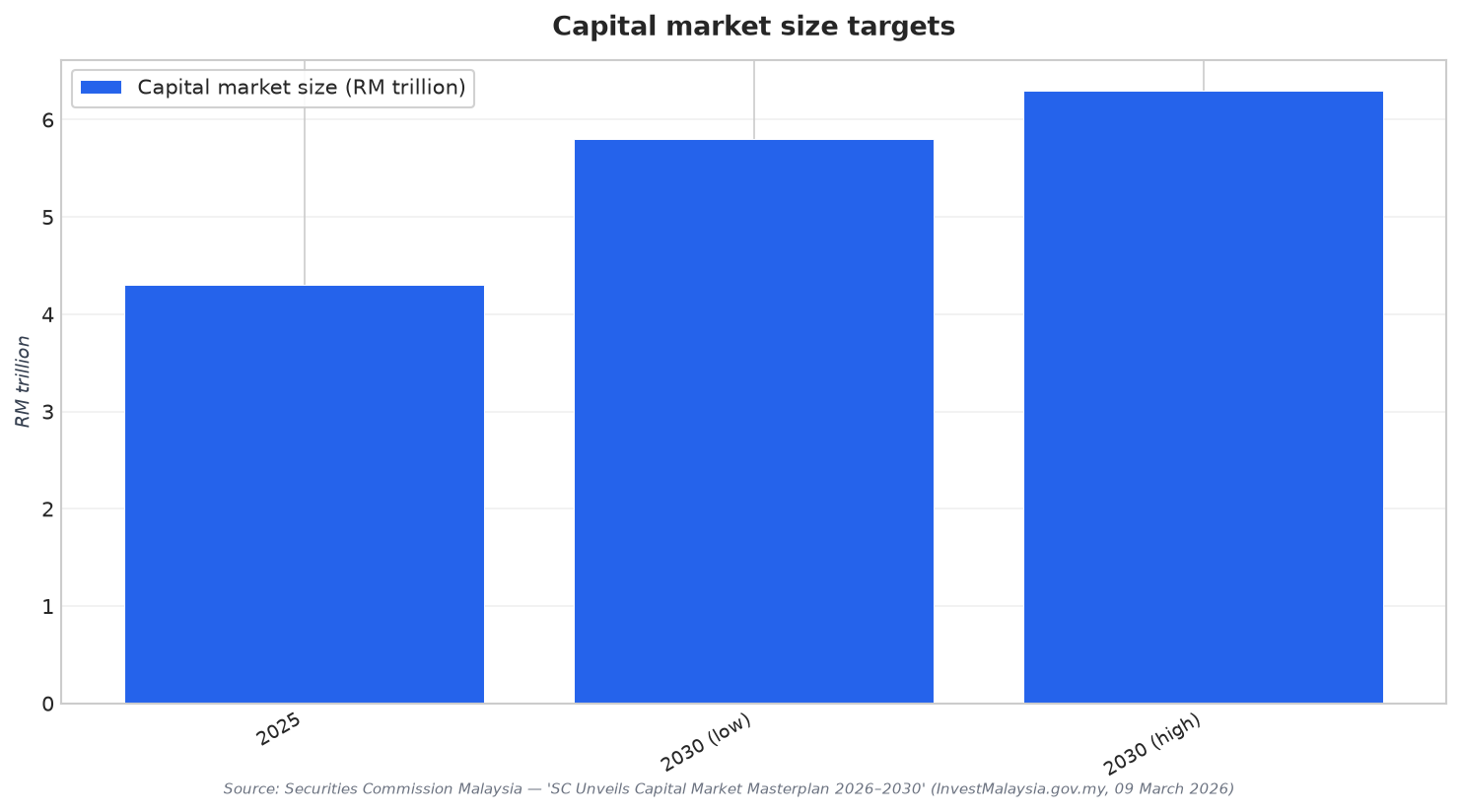
On the financing side, Malaysia’s Securities Commission launched the Capital Market Masterplan 2026–2030 (CMP) aligned with national priorities that include the 13th Malaysia Plan and other frameworks. Under the CMP, Malaysia’s capital market is projected to expand at a 6% to 8% CAGR to RM5.8 trillion to RM6.3 trillion by 2030, from RM4.3 trillion in 2025. The SC also stated an ambition to grow market size by RM1.5 trillion to RM2 trillion in five years. For businesses, this signals an emphasis on fundraising routes such as new listings, stronger corporate bond financing, and initiatives aimed at capital efficiency and value creation.
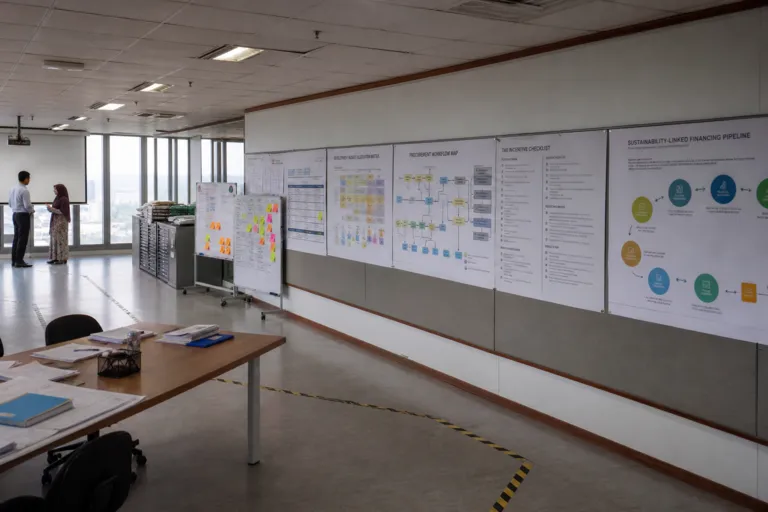
Sustainability-linked financing is positioned as a measurable priority inside capital markets. Reporting on the CMP states an aim to mobilise RM90 billion to RM100 billion in cumulative financing by 2030 for projects delivering measurable environmental and social impact. The longer-horizon figure rises to RM550 billion to RM800 billion by 2045, alongside an overall capital market projection of RM13.8 trillion to RM20 trillion by 2045. Businesses tracking the Malaysia 13th Malaysia Plan cycle can use these targets as practical signals: build project pipelines that are financeable, document outcomes that are measurable, and align governance so instruments such as ESG- and Shariah-linked propositions are investment-grade rather than marketing claims.
What total public outlays are described for Malaysia’s 2026–2030 plan period?
What growth and deficit guidance is mentioned for the 2026–2030 cycle?
How did Malaysia’s SST rules change from 1 July 2025, and why does it matter to businesses?
What incentives are offered in the Johor Singapore Special Economic Zone?
What should businesses track under the Malaysia 13th Malaysia Plan period when it comes to capital markets?