Malaysia’s Energy Efficiency and Conservation Act (EECA) 2024 was enacted to regulate efficient energy consumption and conservation. It aims to improve energy efficiency across sectors, reduce energy waste, and support environmental goals, including climate neutrality by 2050. Multiple sources note the Act came into force on 1 January 2025. The framework is designed to set clearer roles and responsibilities for stakeholders and to ensure compliance with energy efficiency standards. For industrial leaders, the central shift is moving from ad-hoc energy initiatives to structured, documented duties that can be tested through reporting, audits, and qualified personnel requirements.
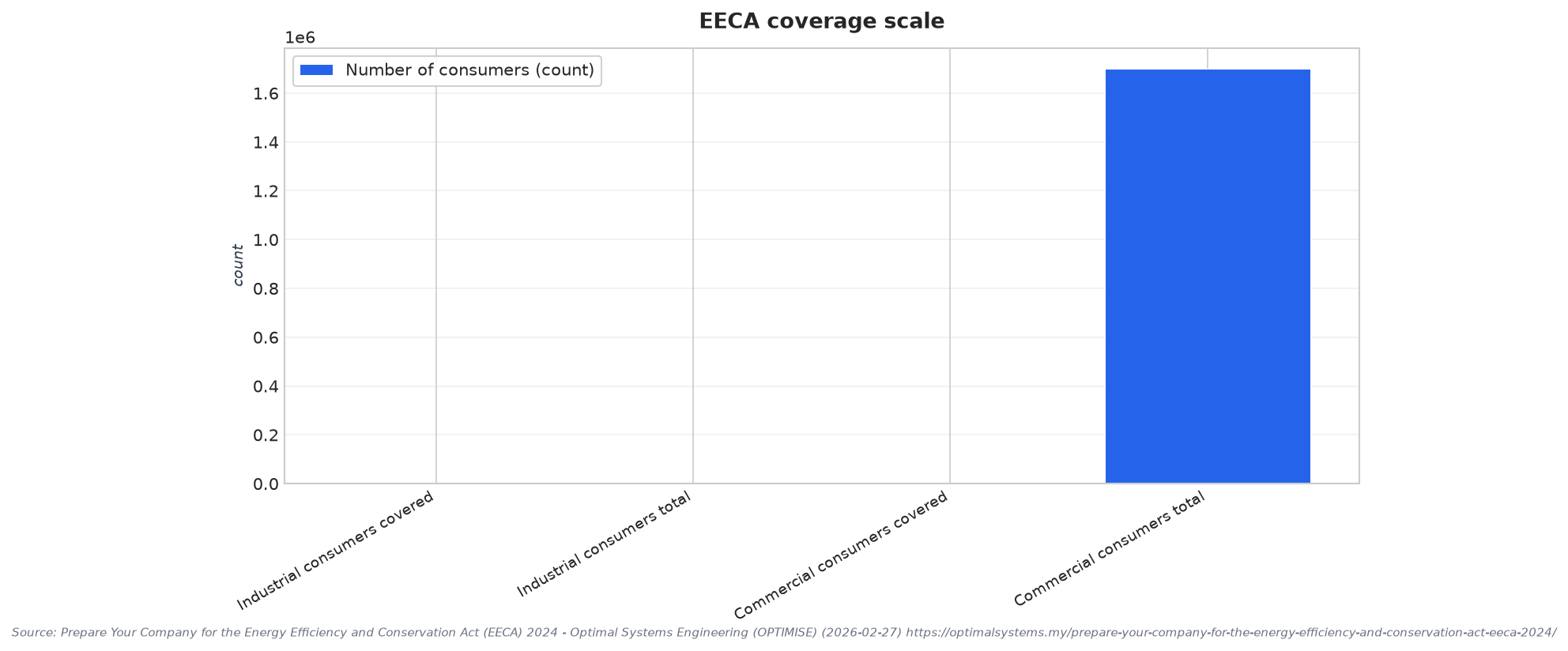
For industry, scope matters. One source states the EECA covers approximately 1,500 out of 2,700 industrial consumers, and 500 out of 1.7 million commercial consumers. The same source explains that the Act regulates heavy industrial and commercial users consuming 21,600 GJ per annum, described as equivalent to an annual electricity bill of RM2.4 million or an annual natural gas bill of RM1 million. Another guide also uses the 21,600 gigajoules threshold to identify energy consumers who are “concerned” under the Act. This helps companies self-screen quickly, then confirm obligations with the Energy Commission.
What Compliance Looks Like for Large Users and Buildings
The EECA creates specific duties for large energy consumers. Sources describe requirements to appoint a registered energy manager, implement an energy management system (EMS), prepare an energy efficiency and conservation report, and carry out an audit by a registered energy auditor upon request, followed by an audit-based report. A registered energy manager’s responsibilities include collecting and analyzing energy data, monitoring EMS implementation, and ensuring report accuracy. A legal overview adds that energy managers and auditors must register with the Energy Commission and obtain a valid practicing certificate, and that applicants must be Malaysian citizens who meet prescribed qualifications and criteria determined by the Commission.
Building owners and operators also need to pay attention, especially in commercial real estate connected to industrial operations. One compliance guide states that if you own or manage a commercial building of 8,000 square metres or larger, the EECA 2024 applies. The same source also cites a prescribed efficiency rating for commercial buildings set at a maximum of 250 kWh/m²/year and highlights that violations can include failing to appoint a qualified registered energy manager, not completing a required energy audit, not displaying an Energy Intensity Label (for buildings), and submitting incorrect information in reports. It also notes possible public disclosure of non-compliance, affecting reputation and market access.
Finally, the geography of enforcement is not uniform across the country. One guide explicitly says the EECA currently applies only to Peninsular Malaysia and the Federal Territory of Labuan, while Sabah and Sarawak will develop separate energy efficiency regulations. For companies managing multi-site operations, this means compliance planning should be site-specific, even under a broader Malaysia energy efficiency strategy. Another industry note states the EECA 2024 supersedes the Efficient Management of Electrical Energy Regulations 2008 (EMEER 2008) and requires large consumers to implement energy-saving measures covering both electrical and thermal energy, reinforcing that the compliance lens is broader than electricity alone.
When did Malaysia’s EECA 2024 take effect?
Which industrial and commercial users are covered by the EECA threshold?
What must large energy consumers do to comply under the EECA?
How does the Act treat commercial buildings and energy intensity labeling?
What does Malaysia’s energy efficiency push mean for companies operating in Sabah and Sarawak?