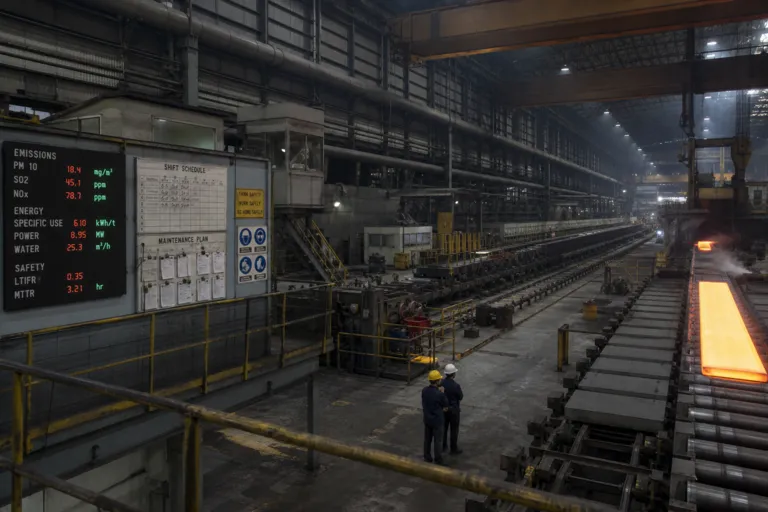
Malaysia’s plan to introduce a carbon tax in 2026 is positioned as a major policy shift, with the first phase expected to focus on carbon-intensive sectors. Reporting has said the initial targets include steel, cement, and energy, and policymakers have also indicated early coverage may include iron and steel production and energy generation. Prime Minister Anwar Ibrahim has framed the move as part of Malaysia’s commitment to sustainable development and climate action. The tax mechanism is expected to be integrated with the National Carbon Market Policy and the postponed Climate Change Bill, which together signal that carbon pricing is being linked to a broader framework rather than treated as a standalone measure.
Cost and competitiveness concerns sit at the center of the debate. Analysts and experts have described the near-term transition as challenging for businesses, with potential shock waves through the supply chain and only limited immediate changes in emissions and revenue generation. From a company perspective, the key exposure is often direct emissions in Scope 1, which come from fuel combustion and industrial processes. Kenanga’s scenario analysis, as reported by BusinessToday, suggested that at a proposed rate of RM15 per tonne of carbon, most companies in the affected sectors may see profitability decline by at least 5% or more. That framing matters for steel and iron producers, as well as energy generators, because the tax becomes an explicit operational cost that can flow through pricing and margins.
How Steel and Energy Companies May Feel the Impact First
Multiple sources point to early targeting of iron, steel, and energy, while some frameworks also include cement, and one analysis expects cement and petrochemicals to be integrated by late 2026. The design details are still being refined, but several rate references appear in public commentary. One business guide estimated a proposed rate around RM35–45 (US$8–11) per tonne of carbon dioxide equivalent (tCO2e). Separately, Bernard Business Consulting illustrated tax sensitivity with examples at RM20 per tonne in 2026 and RM50 per tonne in 2030, including a worked case where liability at RM20/t is RM56 million and at RM50/t is RM140 million. In that same example, a 20% reduction by 2030 lowers liability to RM112 million, described as a RM28 million annual saving in tax alone.
For steelmakers, production routes can shape exposure. Bernard Business Consulting described Blast Furnace-Basic Oxygen Furnace (BF-BOF) as the most carbon-intensive route, creating virgin steel from raw iron ore and coal (coke), and noted that SBTi pathways require plants to integrate Carbon Capture, Utilisation, and Storage (CCUS) or transition to Hydrogen-Direct Reduced Iron (H-DRI). The same source contrasted this with Electric Arc Furnace (EAF) production, which melts recycled steel scrap using high-voltage electricity, and said emissions can drop by up to 80% if powered by renewable energy. This creates a clear planning issue: companies may weigh the opportunity cost of paying the tax against investing in decarbonisation, especially when routes and power sourcing change the emissions profile that underpins tax assessment.
Preparation is also a compliance and governance issue, not just a technology question. PwC emphasised that initially targeted sectors such as iron, steel, and energy should use the pre-finalisation window to plan measurement, reporting and verification (MRV) systems, and to assess trade-offs between tax payments and investments. PwC also flagged new emissions reporting and carbon tax compliance requirements, stronger incentives to improve efficiency and reduce emissions, and increased cost pressures that affect margins and capital allocation. It added that downstream industries such as manufacturing, construction, and logistics may be indirectly affected through supply chain cost pass-throughs and rising expectations around sustainability reporting and Scope 3 emissions management. Taken together, the Malaysia carbon tax 2026 discussion is pushing businesses to treat carbon as a decision variable across operations, procurement, and investment timing.
Which sectors are expected to be targeted first under Malaysia’s 2026 carbon tax?
What carbon tax rate has been discussed for Malaysia’s 2026 rollout?
How could the Malaysia carbon tax 2026 affect profitability in targeted industries?
What example figures show potential carbon tax liabilities for industry?
What should companies do now to prepare for carbon tax compliance?