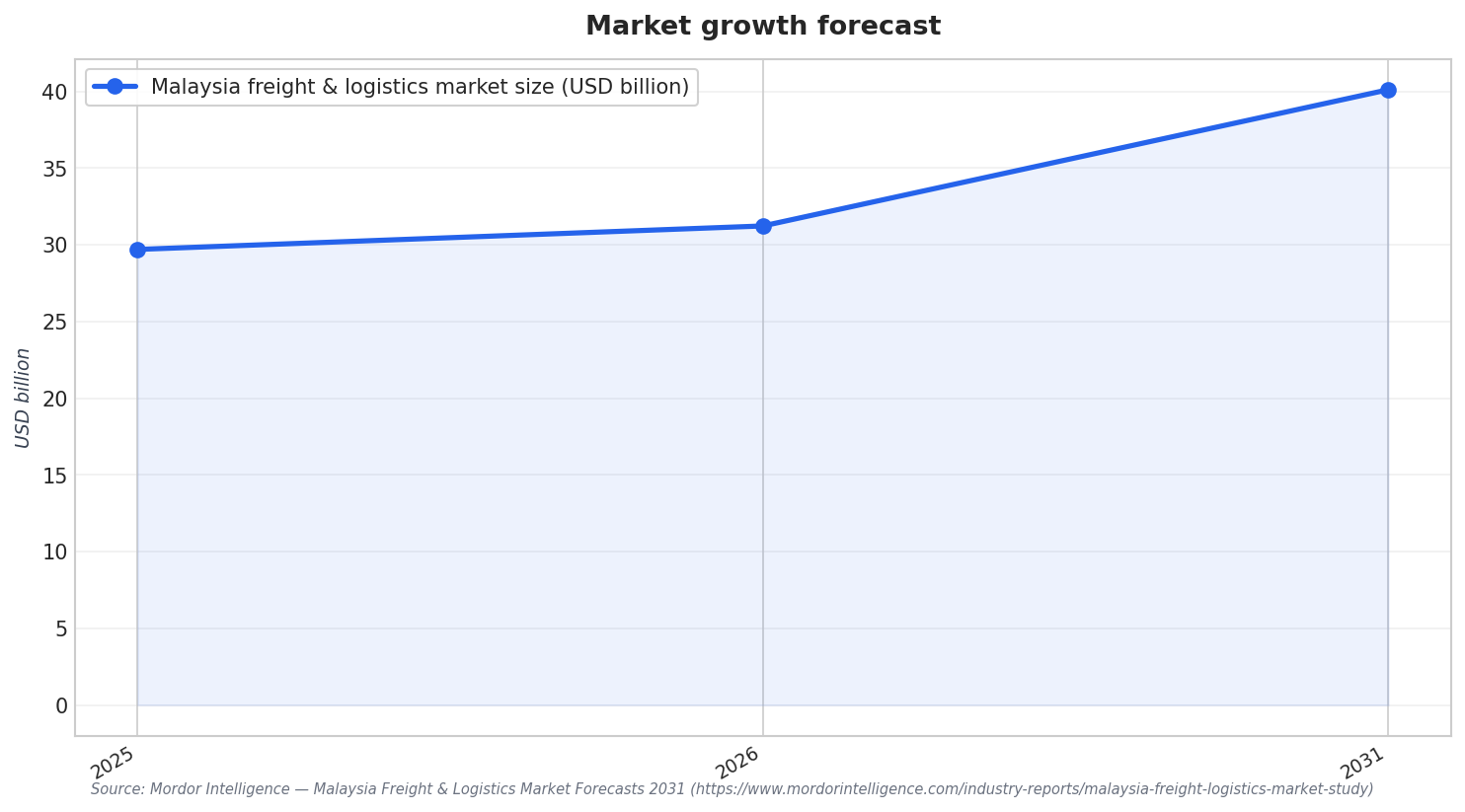
Malaysia’s logistics network is being reshaped by growth in freight, e-commerce expectations, and investment-led industrial expansion. Mordor Intelligence projects the Malaysia freight and logistics market will grow from USD 29.70 billion in 2025 to USD 31.23 billion in 2026, reaching USD 40.11 billion by 2031, at a 5.14% CAGR over 2026–2031. In parallel, Malaysia’s warehousing market is expected to reach USD 700 Mn by 2028, supported by continuing demand for faster delivery in urban areas. This is the operating backdrop for Warehouse Automation Malaysia strategies: warehouses are being asked to do more, faster, and with higher consistency across inbound, storage, picking, and dispatch.
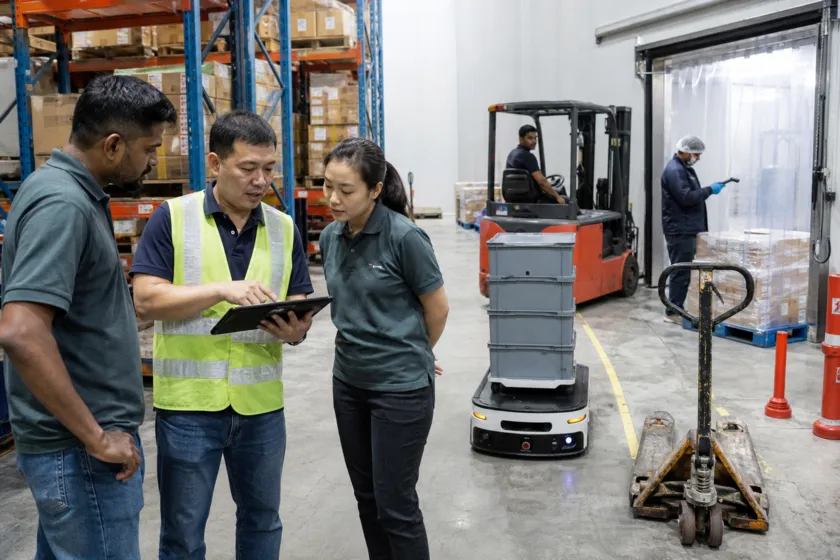
The pressures are not abstract. The same Mordor analysis notes that same-day fulfillment has become a standard expectation, with leading platforms shipping 95% of orders within 24 hours, while 64.8% of internet users lean toward free delivery. Those two signals create a direct operational requirement: higher throughput without proportional increases in labor or space. Nexdigm adds that companies implementing robotics and AI in warehousing and inventory management can enhance throughput by up to 25%, positioning automation as a practical lever to protect service levels. In 2022, investments in logistics technology rose, and automation and digital solutions gained traction among 40% of logistics firms, reflecting widening adoption of tools such as WMS and robotics.
Where Automation Creates the Biggest Efficiency Gains
Malaysia’s warehousing demand profile also explains why certain automation use cases are gaining urgency. Ken Research reports that in 2023, Industrial Freight/Retail dominated Malaysia’s warehousing business-model segment, driven by the manufacturing sector and growing e-commerce activities. By end-user, Food & Beverage led in 2023, supported by growing demand for cold storage and distribution facilities as consumer spending rose and food delivery expanded. These mixes favor automation that reduces errors and improves order fulfilment rates, outcomes that Nexdigm links to WMS and robotics adoption. On the logistics side, manufacturing accounted for 38.98% of the Malaysia freight and logistics market size in 2025, reinforcing the need for disciplined inventory control and repeatable warehouse execution.
Cold-chain and specialized handling are another catalyst. Mordor reports that non-temperature-controlled warehousing dominated with a 91.10% share in 2025, but temperature-controlled capacity is predicted to grow at a 6.24% CAGR between 2026 and 2031, supported by pharmaceutical and halal-food needs. This shift is closely tied to automation priorities because temperature-controlled workflows often benefit from tighter process control and reduced dwell time. In the wider regional context, Southeast Asia’s warehouse automation market was valued at USD 0.81 billion in 2025, is estimated at USD 0.91 billion in 2026, and is projected to reach USD 1.63 billion by 2031 at a 12.36% CAGR (2026–2031). These Southeast Asia figures are not Malaysia-only, but they provide a benchmark for the broader investment cycle around mobile robots, semi-automation, and higher-throughput hubs.
Location and infrastructure also shape adoption pathways. Ken Research identifies Selangor as Malaysia’s dominant warehousing region in 2023 due to its strategic location, well-developed infrastructure, and proximity to major ports and urban centers. Mordor highlights Port Klang’s rise to the world’s 10th-busiest container port and points to extensive government funding for rail and highway projects as forces reshaping supply-chain networks and warehouse automation priorities. Foreign direct investment reached MYR 378.5 billion (USD 82.3 billion) in 2024, creating 207,000 jobs and expanding demand for cross-border forwarding, value-added distribution, and specialized manufacturing logistics. For operators, the next frontier is aligning automation choices with these corridors: faster replenishment cycles, cleaner inventory visibility, and scalable fulfillment performance.
What is driving warehouse automation adoption in Malaysia right now?
How much can robotics and AI improve warehouse throughput?
How big is the Malaysia freight and logistics market expected to get?
What does Warehouse Automation Malaysia mean for cold-chain growth?
Which region led Malaysia’s warehousing market, and why does it matter for automation?