Medical inflation in Malaysia is colliding with household budgets and corporate benefit costs in 2026. Several signals explain why health premiums feel like they are surging. Allianz Research reported overall health premium income rose 7% in 2025, the fastest-growing segment of the local insurance market, in a year when medical inflation ran at 15% (above the global and Asia Pacific average of 10%). At the same time, the Life Insurance Association of Malaysia reported the industry’s medical claims payout rose 5.3% to RM9.4 billion in 2025, from RM8.9 billion the year before. Medical claims also accounted for 53.9% of total industry claims in 2025, while total claims increased 3.4% to RM17.4 billion.
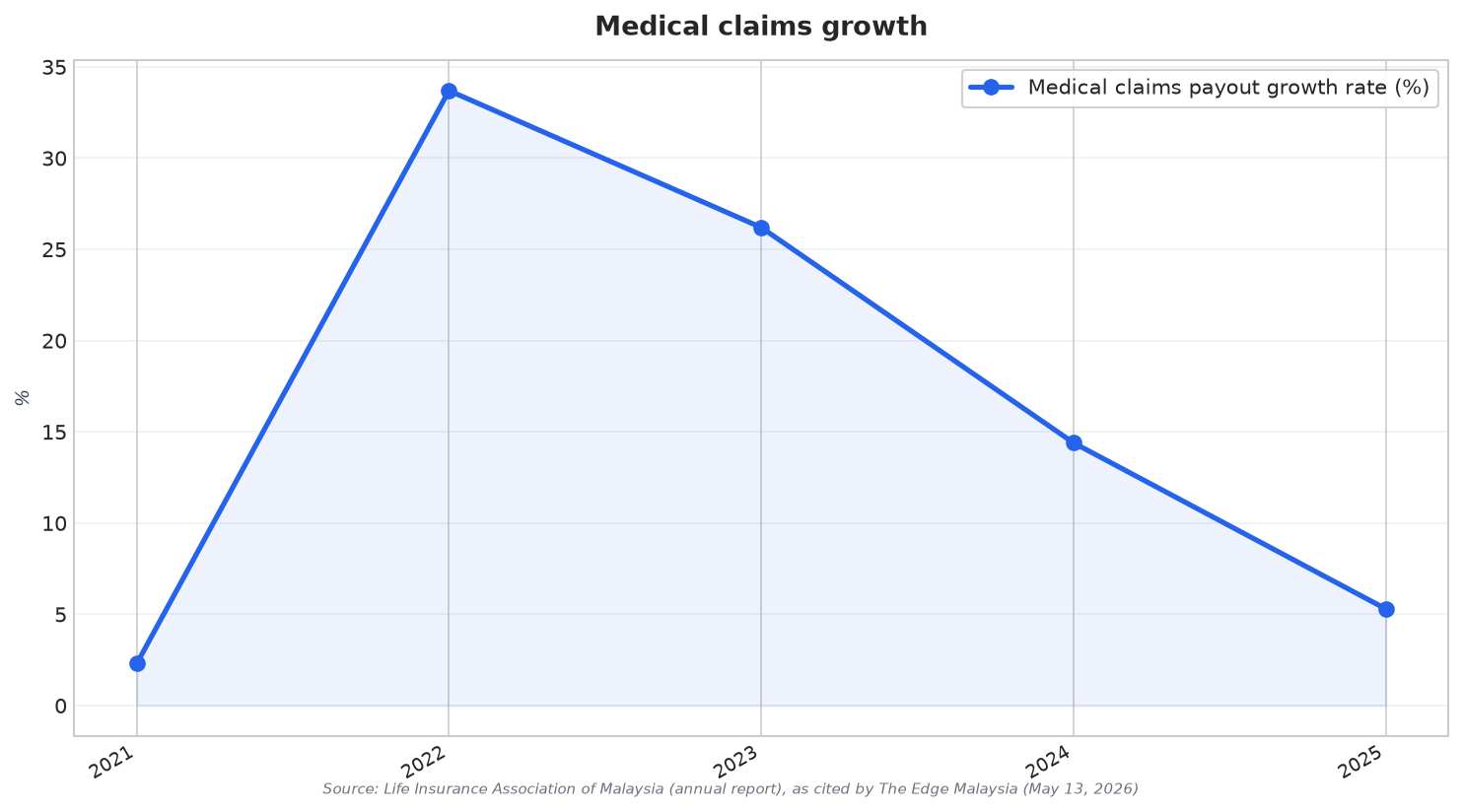
Those 2025 figures also hide a key 2026 story: a rebound risk after a brief slowdown. The Edge Malaysia noted that medical claims inflation fell to its lowest level since 2021 last year, after much higher growth rates in earlier years: 14.4% in 2024, 26.2% in 2023, 33.7% in 2022, and 2.3% in 2021. Analysts cited mounting cost pressure linked to the Middle East conflict, with MBSB Research warning that war-related logistical disruptions could push drug and medical equipment prices up again. On April 10, Health Minister Datuk Seri Dr Dzulkefly Ahmad confirmed medicine costs have risen by up to 30% to 40% in some cases, and possibly higher for specific medical devices, with stockpiles said to be stable until June.
What’s Really Driving the Pressure: Utilisation, Not Just Price
A World Bank analysis of de-identified claims from a centralized claims database covering 2022–2024 adds another layer to the premium story. It found total claims rose substantially across major service categories, with particularly fast growth in pre-hospitalization and post-hospitalization claims. The report said cost growth was largely driven by volume (utilisation), accounting for three quarters of all cost growth, followed by higher service charge prices. Free Malaysia Today highlighted the same message, reporting that claims inflation stood at 21.6% in 2024, outpacing premium inflation of 13.2%, and that misaligned incentives were a key contributor. The World Bank also found the share of claim amounts due to hospital supplies and services was over 70% and rising, and that 23.6% of inpatient admissions in 2024 were potentially preventable with stronger primary care.
Looking forward, Aon’s 2026 Global Medical Trend Rates Report projects Malaysia’s medical inflation rate will rise from 15% to 16% in 2026. Aon said key medical conditions driving costs for Malaysia in 2026 include respiratory, musculoskeletal, gastrointestinal, and cardiovascular conditions, as well as accidents, with lifestyle-related risk factors such as high blood pressure, high cholesterol, and high blood glucose. In the same report, Malaysia’s projected 16% gross medical trend rate for 2026 was above Thailand (14.8%), the Philippines (14%), Singapore (13%) and Vietnam (12.2%), and below Indonesia (16.9%). These projections help explain why discussions around Malaysia medical inflation are closely tied to premium renewals, especially when utilisation rises and more expensive inputs flow through hospital billing.
Policy measures are also shaping how increases appear to consumers. Bank Negara Malaysia directed insurers and takaful operators to spread premium increases over a minimum of three years, limiting hikes to not more than 10% per annum. BNM also announced no premium increase in 2025 for individuals aged above 60, with any increase only after their policy anniversary in 2026. Budget 2026 included RM60 million in joint funding from the Government and the private sector to introduce affordable basic insurance products for all Malaysians, while BNM said the base medical and health insurance/takaful product design was expected to be finalised by end-2025 with a view to launch in 2027. Separately, RinggitPlus reported that roll-out of the DRG fixed-fee hospital payment model was delayed to 2027, and that a new base medical and health insurance plan with premiums starting from RM50 was in development, with implementation targeted for end-2026.
Why are health premiums rising in Malaysia heading into 2026?
What does the World Bank say is the main driver of rising MHIT costs?
How big is the projected medical inflation rate for Malaysia in 2026?
What is Bank Negara Malaysia doing about premium hikes?
What should consumers understand about Malaysia’s medical inflation trends and premiums?