Malaysia’s case as an ASEAN trade connector is being reinforced by measurable trade and throughput momentum. In 2025, Malaysia’s total trade with ASEAN reached a record RM777.61 billion and represented 25.4% of the nation’s total trade, according to remarks by Transport Minister Anthony Loke Siew Fook reported at the ASEAN Ports and Logistics Exhibition and Conference 2026. The same remarks emphasized that more than 90% of Malaysia’s international trade moves by sea, keeping ports central to national and regional connectivity. For port operators, this combination matters because it links the country’s trade direction to the core asset base of terminals, hinterland links, and ship-side productivity.
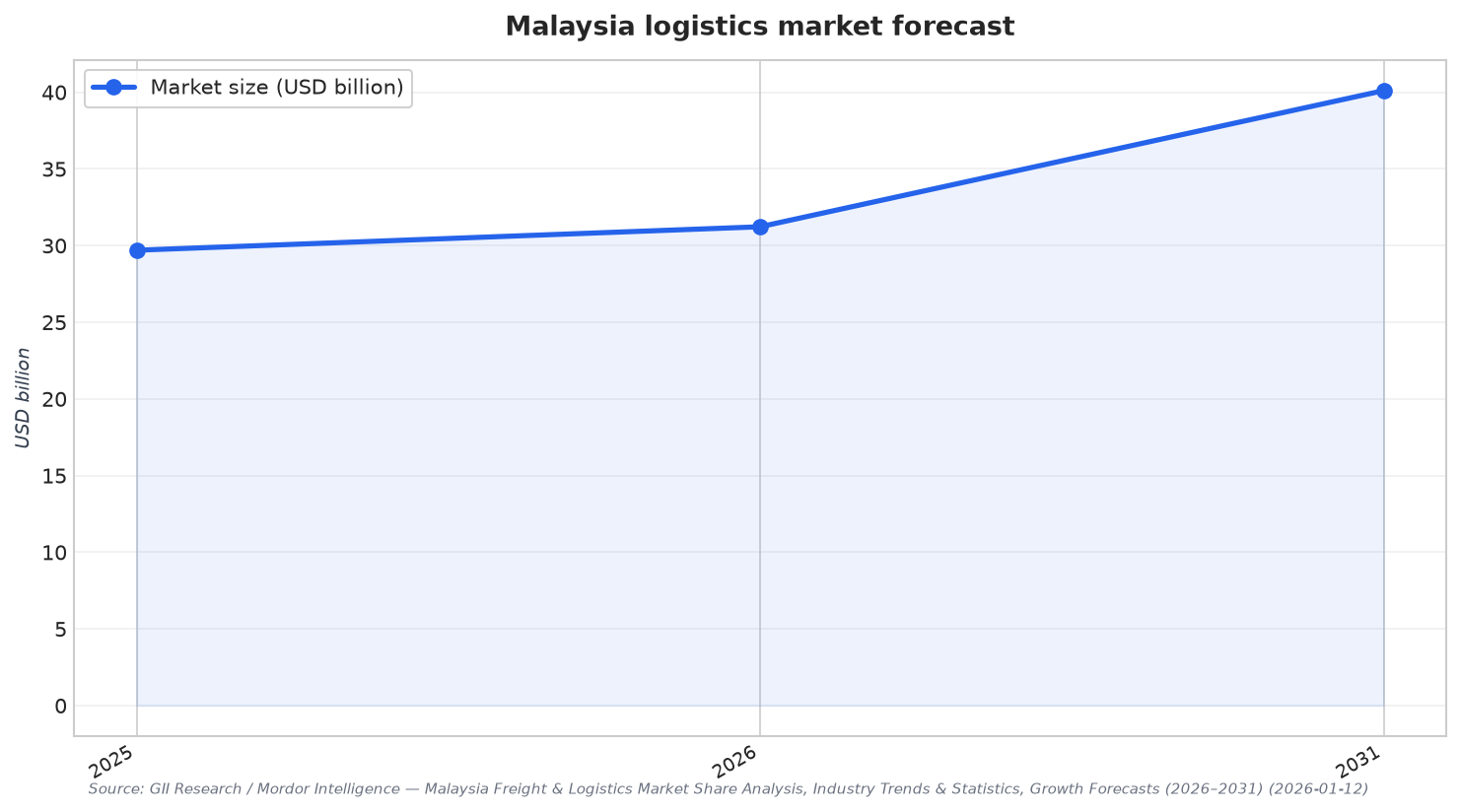
Recent operating indicators also point to continuing demand for terminal capacity and services. As of May, Port Klang recorded volume growth of 5% against the same period in 2025, while PTP grew 8%, maintaining momentum from the prior year’s performance, the same conference coverage reported. These gains do not prove every terminal will expand at the same pace, but they show activity at two key nodes that freight forwarders and shipping lines already use for routing decisions. In parallel, the Malaysia freight and logistics market is expected to grow from USD 29.70 billion in 2025 to USD 31.23 billion in 2026 and reach USD 40.11 billion by 2031, implying a 5.14% CAGR over 2026–2031.
What’s Fueling Malaysia’s Port-Operator Upside
Several demand-side forces support a constructive outlook for Malaysia regional trade intermediary ports without assuming a single, linear growth path. Malaysia’s internet retail sales index grew 9.5% year over year in September 2025, and DOSM linked online sales events to higher transaction volumes across major e-commerce platforms. Manufacturing is also expanding: Malaysia’s manufacturing output increased 7.4% year over year in August 2026, after 6.4% in July (with August provisional). At the same time, manufacturing accounted for 34.5% of Malaysia’s accumulated foreign direct investment position at the end of Q2 2026, suggesting an established base of production-linked shippers that generate both import inputs and export volumes.
Infrastructure and policy signals matter because they can widen the addressable market for terminals beyond today’s road-centric flows. Malaysia Rail Link reported that East Coast Rail Link construction was 95.41% complete as of August 2026, indicating progress toward new feeder connections once operating milestones are reached. At the ASEAN level, Malaysia earmarked MYR 2.5 billion (USD 559.25 million) for rail freight upgrades aimed at 30% emission cuts by 2030. Digital adoption is another lever: Singapore-based Haulio raised truck utilization 40% on the Malaysia–Singapore lane in 2024, and Malaysia-based analysis points to rising use of digital freight aggregators by SMEs and cross-border e-commerce sellers for rates, multimodal connectivity, and real-time visibility.
For port operators, execution will hinge on how well terminals integrate with cross-border corridors, data-driven logistics, and value-added services that keep cargo sticky. One market report highlights that Malaysia benefits from 16 trade pacts that suppress cross-border clearance fees and harmonize labeling, easing SME access to overseas buyers. The same source notes partnerships like UPS–Ninja Van extending global express products to 52 retail outlets, adding capacity resilience and tracking options that support exporters. At the same time, Nexdigm flags operational fragmentation across trucking, warehousing, and customs brokerage, plus documentation inconsistencies and peak-season port congestion within ASEAN. Managing these frictions is part of the growth story, not separate from it.
Why are Malaysia’s ports so important to its trade role in ASEAN?
What recent signs point to rising port activity in Malaysia?
How big is Malaysia’s trade with ASEAN, based on the latest cited figures?
What is the growth outlook for Malaysia’s freight and logistics market that supports port operators?
What trends shape the outlook for Malaysia as a regional trade intermediary through its ports?