Malaysia’s healthcare export narrative is often reduced to medical tourism, but the country is building outbound strength across products, services, and policy-backed capabilities. BMI Fitch Solutions projects Malaysia’s healthcare expenditure to grow at a CAGR of 8.7% between 2023 and 2028, and public investment is rising alongside private-sector modernization. In the 2025 national budget, Malaysia allocated $10.1 billion to the Ministry of Health (MOH), up from $9.2 billion in 2024. This spending backdrop matters for export readiness because it supports capacity, technology adoption, and partnerships that can translate into internationally marketable services and stronger supply chains.
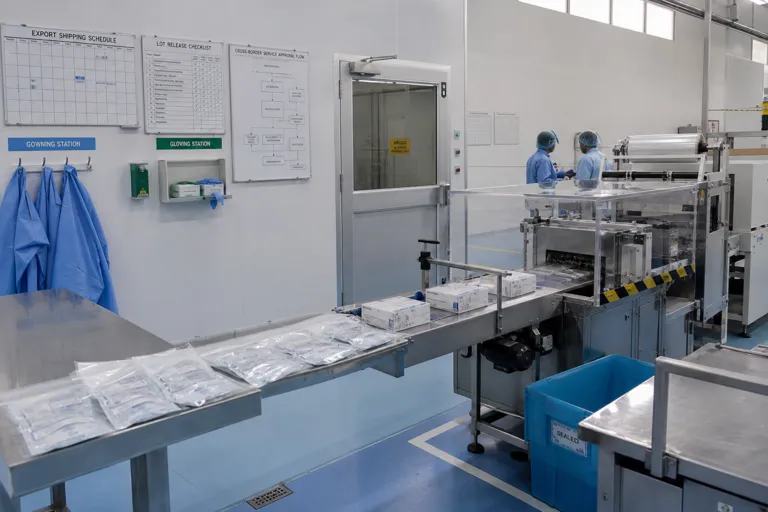
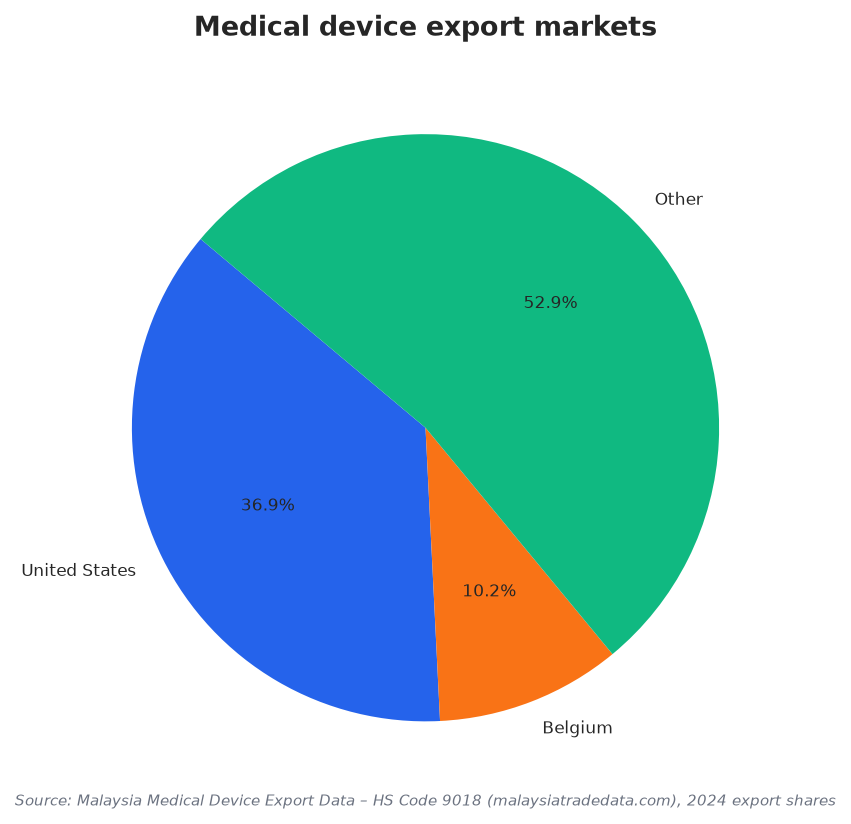
One of the clearest signals is the performance of medical devices. Shipment-level trade data for HS Code 9018 reports that Malaysia’s medical device exports surged 31% to approximately RM37 billion (around $8.3 billion) in 2024, positioning Malaysia as the largest medical device exporter in ASEAN. The United States absorbed roughly 36.9% of total exports in 2024, worth approximately RM13.7 billion (about $3.07 billion). European distribution hubs also feature prominently, including Belgium at 10.2%. At the same time, the trade data notes that Malaysia’s export share within ASEAN markets has been declining, pointing to rising regional competition even as extra-regional demand remains strong.
Services Exports: From Medical Travel to Digital Care Pathways
Services exports still matter, but they are evolving beyond simple travel packages. Malaysia aims to be a regional leader in specialized care, attracting travellers from across Southeast Asia, South Asia, and the Middle East, while private hospitals invest in robotic surgery and advanced technology to draw international patients. The country also promotes positioning such as “Fertility Hub of Asia,” “Cardiology Hub of Asia,” and a “Center of Excellence for Cancer care.” For medical tourism specifically, Wikipedia reports around 850,000 individuals travelled to Malaysia for medical treatments in 2022, contributing RM1.3 billion (US$295 million) in revenue, down from pre-pandemic numbers of 1.2 million individuals and RM1.7 billion (US$416 million). The same source states an expected revenue of RM2.4 billion (US$558 million) by 2024.
Digital health and clinical research add more exportable service layers, especially when combined with international partnerships. Malaysia’s Health White Paper envisions a digital transformation in care delivery, and the MOH ICT Masterplan outlines expansion in telemedicine, electronic medical records (EMR), and data privacy and cybersecurity. These capabilities can support cross-border care coordination, second opinions, and follow-up programs tied to hospital brands. On the research side, Malaysia’s multi-ethnic population is described as offering diverse genetic representation, making it a valuable site for clinical research in infectious diseases, oncology, cardiology, and hematology. The same guidance highlights partnership pathways for joint trials between firms, hospitals, and research institutions.
Policy priorities also shape what Malaysia can export next. Demographics and chronic disease needs are part of the push: 11.6% of Malaysia’s population is over age 60, and diabetes affects roughly 1 in 5 Malaysian adults, according to the country commercial guide. These pressures align with expected priorities over the next decade, including high-tech medical devices, health IT and digital health, elder care services, and NCD monitoring and management, alongside medical travel and clinical research. The guide notes a dual system where private providers lead health technology adoption and international partnerships, while public providers expand preventive services and rural access. Together, these forces are widening the pipeline for Malaysia healthcare exports beyond tourism alone.
What is driving Malaysia’s healthcare exports beyond medical tourism?
How large were Malaysia’s medical device exports in 2024?
Which markets buy the most Malaysian medical devices?
What did medical tourism contribute to Malaysia in 2022, and what was expected for 2024?
How does digital health policy connect to exportable healthcare services?