In 2026, Malaysia’s palm oil story sits at the intersection of production constraints and stricter sustainability expectations. Fastmarkets projects Malaysia’s 2026 crude palm oil (CPO) production at 19.60 million tonnes, a forecasted reduction of 400,000 tonnes from 2025. The same outlook notes that 2025 output was nearing 20 million tonnes, supported by favourable weather, adequate labour for timely harvesting, and improved fertilizer application in the previous year. But it also flags that 2026 performance could be tempered early in the year as trees enter a resting phase after solid yields in October and November.
Beyond seasonal yield patterns, structural capacity issues matter for long-run supply. Fastmarkets describes stagnating oil palm planted area in Malaysia at around 5.60 million hectares, which is expected to curb future production potential. It also points to high dependence on foreign labour for harvesting, alongside an increasing number of aging trees, as factors limiting the country’s ability to boost output. These on-the-ground constraints help explain why sustainability, traceability, and market access are now as important as agronomy in shaping how Malaysian volumes are sold and priced.
Sustainability, Certification Gaps, and EU Deforestation Compliance
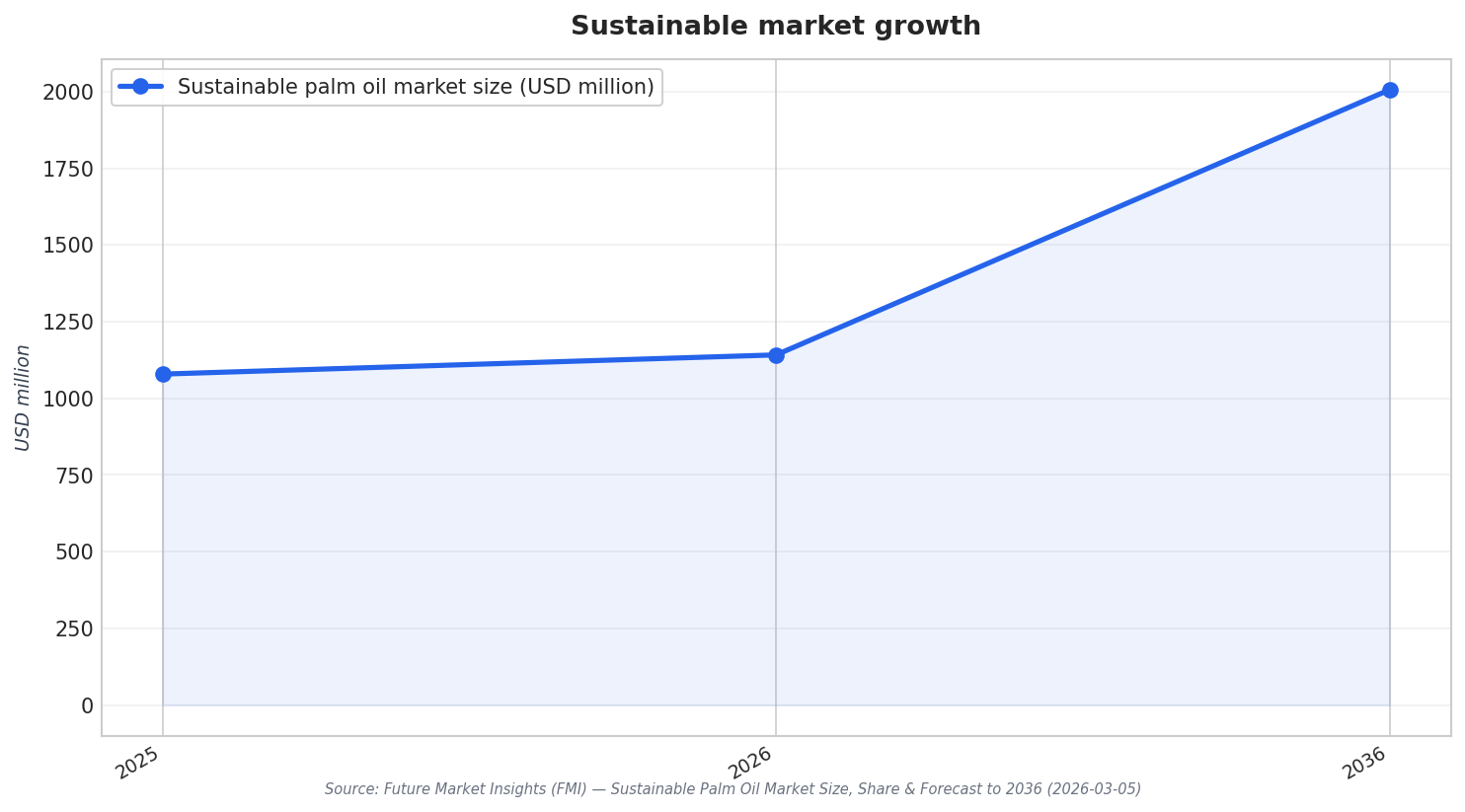
Sustainability requirements are also creating a tiered market. Future Market Insights (FMI) states that EUDR enforcement effective December 2025 is creating a “two-speed market” where certified deforestation-free palm oil can command premiums of 8% to 15%, while uncertified volumes face progressive exclusion from EU, UK, and North American supply chains. FACT.MR similarly describes how the EU Deforestation-Free Regulation (EUDR) and RSPO certification create tiered structures with premium pricing for certified sustainable palm oil. For Malaysia, this means pricing power increasingly depends on documentation and verification, not only on benchmark prices.
Certification supply and demand are not perfectly aligned, which adds friction. A Frontiers article reports global production of over 15.4 mt of RSPO certified sustainable palm oil, while consumption was only 9.2 mt in 2022. The same source notes that from 2018 to 2020, deforestation declined in both Malaysia and Indonesia. It also cites a gap analysis commissioned by the Malaysian Palm Oil Council (MPOC), released May 2, 2024, concluding that Malaysian Sustainable Palm Oil (MSPO) meets EUDR deforestation requirements. This positions MSPO as a potentially important compliance pathway for EU-bound supply chains, especially if uptake and verification are operationally smooth.
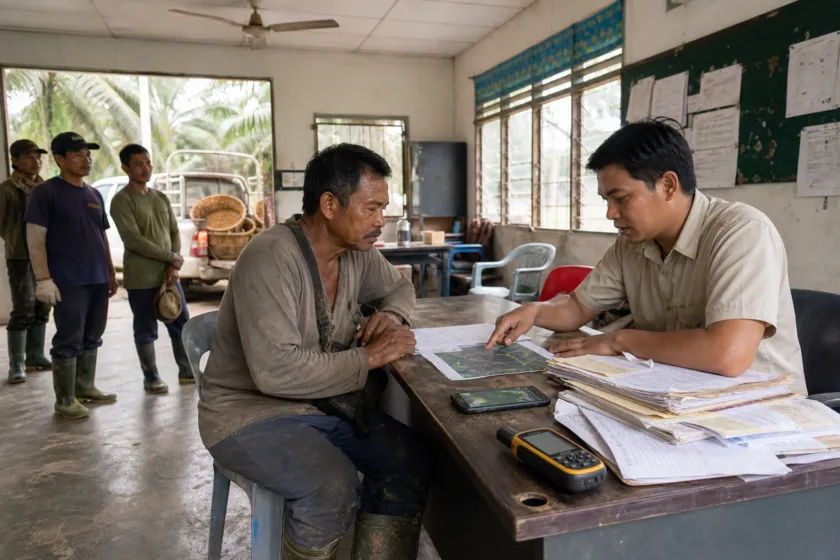
Smallholder inclusion remains a central challenge in making compliance scalable. FMI highlights that smallholder certification costs remain a structural barrier to RSPO compliance in Indonesia and Malaysia, concentrating certified supply among large plantation groups and widening the gap between traceable and non-traceable volumes. Frontiers argues that implementation of the EU’s zero-deforestation regulation should focus on working effectively with smallholder growers and points to jurisdictional RSPO certification as an opportunity. It notes that Sabah, Malaysia pledged to achieve 100% RSPO certified palm oil by 2025 and is currently piloting jurisdictional RSPO certification—an approach that could help widen access to premium markets if it can be executed at scale.
What is Malaysia’s projected CPO output in 2026?
How do EU deforestation rules affect pricing for certified palm oil?
Does MSPO meet EUDR deforestation requirements?
Why is certification harder for smallholders in Malaysia and Indonesia?
What are the main sustainability and supply pressures shaping the Malaysia Palm Oil Industry outlook?